
By Camille D. Ford | November 2025
Summary
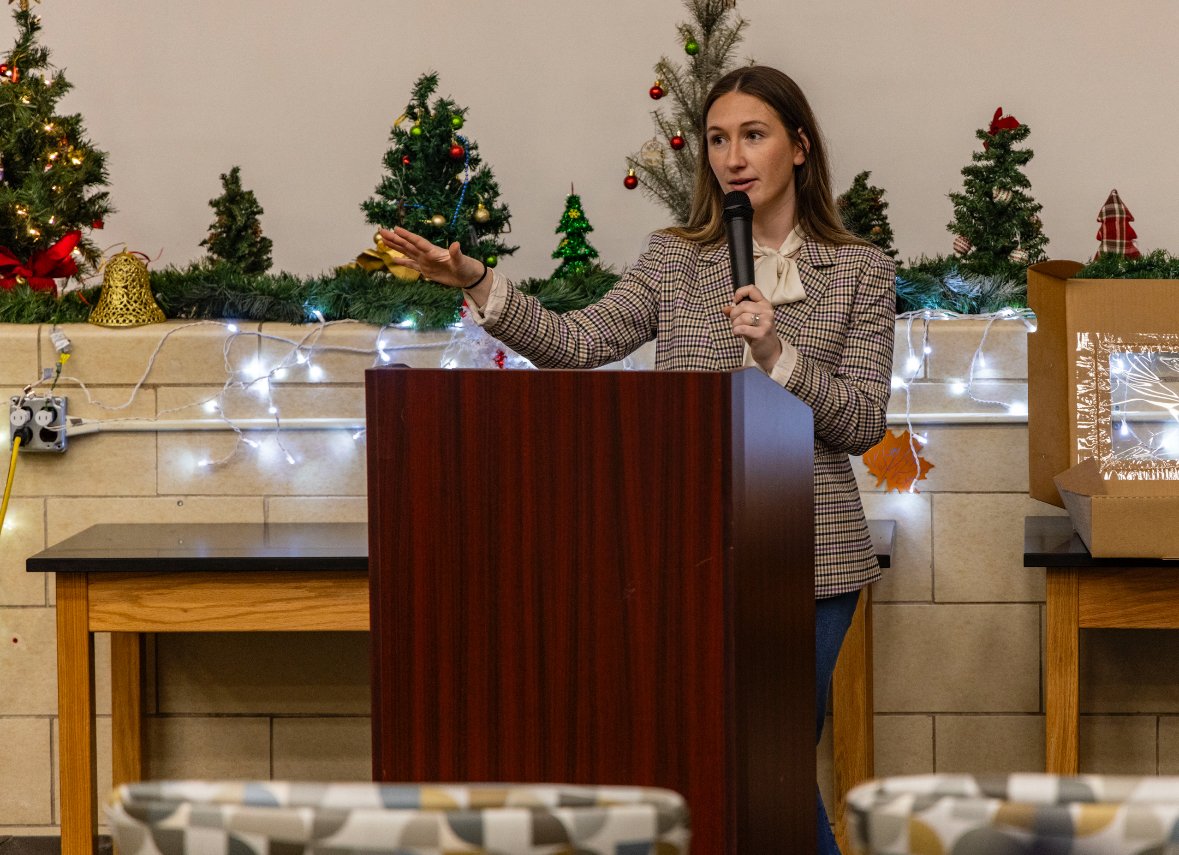
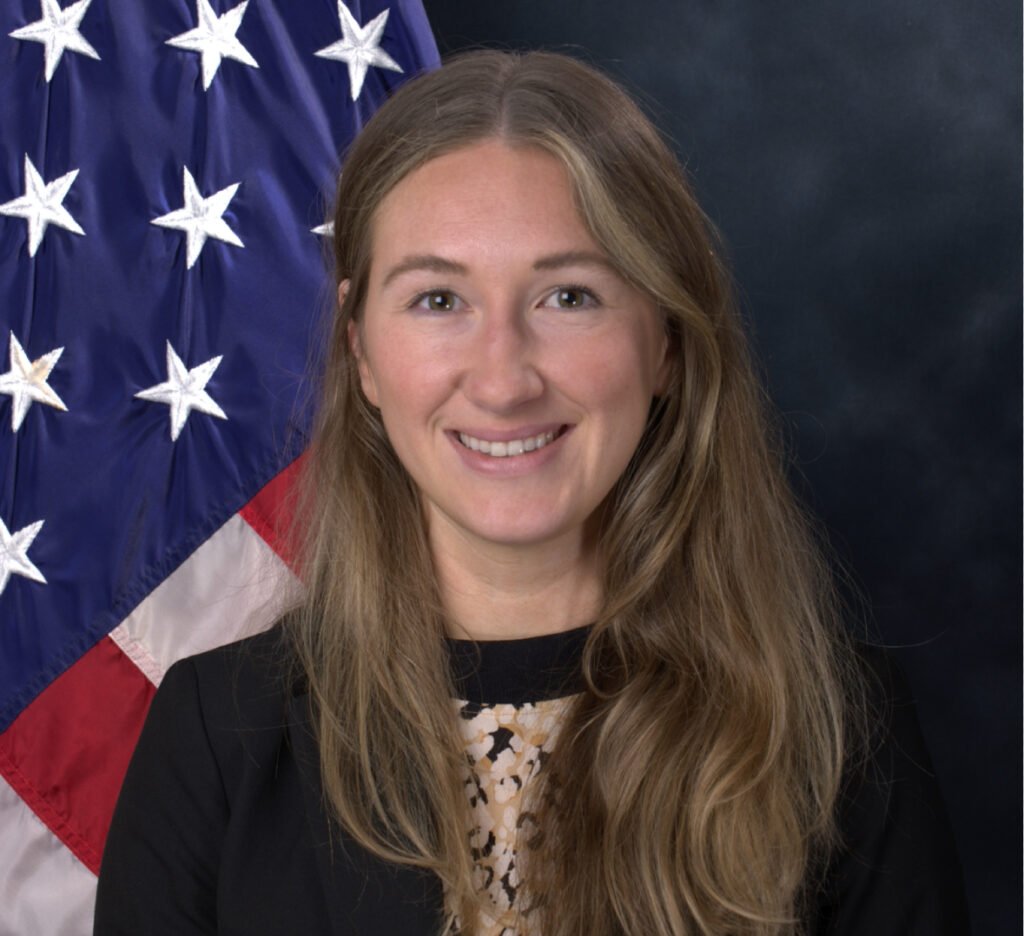
Hannah McDuffie, Chief of Public Affairs for VA Tennessee Valley Healthcare System, turned a childhood shaped by Hurricane Katrina into a lifelong mission of connection. Leading a team of nine public affairs, outreach and creative specialists across three states serving more than 146,000 veterans, she built trust one conversation at a time. Whether walking into homeless encampments in the cold of night or organizing presidential visits, her message stays the same: communication is a lifeline, and no one should ever feel forgotten.
The Beginning
Ten o’clock at night in January. Thirty degrees. Nashville’s Point in Time Count, the annual census of people experiencing homelessness. Hannah McDuffie was out there in the cold, walking wooded trails and capturing the TVHS Homeless Veteran Program team in action. Some people were veterans. Some were not. All of them were seen.
“The team was out there from ten at night until two in the morning,” she says. “Knocking on car windows, walking through wooded trails. Some people were veterans, some weren’t, but we met them where they were. That’s what this work means to me.”
Her story begins long before she joined VA. At nine years old, Hannah sat beside her mother as Hurricane Katrina tore through New Orleans, Louisiana and Bay St. Louis, Mississippi. Their Mississippi home, which had survived Betsy and Camille, was destroyed when Katrina’s eye went directly over it. The storm surge reached thirty feet.
She remembers the sound of her mother crying and not knowing what to do. “As a kid, you don’t fully understand what’s happening, especially something like that. You lose everything or close to everything. So, I’m just patting her on the shoulder. I’m like, ‘It’s okay, it’ll be okay.'”
What came next changed everything.
“I remember active duty military members coming into the Gulf Coast and New Orleans,” Hannah recalls. “I remember the National Guard. I remember FEMA. People at their absolute lowest, and these public servants just showed up. I actually work with people now who were deployed during Katrina, and I’m like, I was there. I respect that, I appreciate that, I’m forever grateful because New Orleans is my home and still rebuilding in my mind. The city’s never been the same since Katrina.”
That experience of loss and service shaped her deeply. So did her parents’ careers in federal service. Her mother traveled the world with the Navy’s oceanography team, mapping the ocean floor for submarines and missiles. Her father worked as a contractor for NASA. Hannah still has stickers from Stennis Space Center and rocket tests she attended as a child.
And then there was her grandfather, who turned down a full-ride scholarship to Tulane to serve as a Marine intelligence officer in the Korean War. “Going into VA is another way I can honor my grandfather’s legacy and maybe feel a sense of connection to the sacrifice that he made,” she says.
Three experiences defined her: her parents’ dedication to service, the devastation and recovery after Katrina, and the legacy of her grandfather’s sacrifice.
The Mission
As Chief of Public Affairs for VA Tennessee Valley Healthcare System, Hannah leads nine communication and outreach specialists across Tennessee, Kentucky, and parts of Georgia. Her team supports two level 1A medical centers, 21 locations, and more than 5,000 staff serving over 146,000 veterans.
The numbers matter: 120-plus events attended, sixteen resource fairs hosted, and a 93% veteran trust score, above the national average. But the real mission goes beyond data.
“My goal is to connect veterans with the information and care they’ve earned,” she says. “And there is no town too big or too small that we shouldn’t be going to. I want us to meet veterans where they’re at, spiritually, mentally, physically, geographically.”
Using data from VA’s Veteran Signals and Survey of Healthcare Experiences of Patients, Hannah identifies areas where outreach is needed most. “Some might call 85% good, a passing score. But Mr. Dücker and I want to be the best,” she says. “We go directly into those communities, and trust scores rise. That’s proof our communication is working.”
At every event, she brings what she calls a unified front: VA health services, benefits teams, executive leadership, and community partners. Together, they deliver everything from PACT Act enrollment and disability support to women’s health and telehealth options.
“We want to meet the veteran where they are,” Hannah explains. “You fought for our freedoms, you served, you deserve to know what type of benefits you earned. And we always say this: it’s not your grandfather’s VA.”
Her dedication shows up in the field. During Nashville’s Point in Time Count, she joined VA Tennessee Valley’s Homeless Veteran Program team and city officials in freezing temperatures. “It’s one thing to hear about it in the news,” she says. “It’s another to see it. That night was the most profound experience for me. It shows we care enough to meet people where they are, even in the middle of January, from ten at night to two in the morning.”
The Stories That Matter
Hannah’s work is measured in metrics and in moments. Like the veteran who approached her outreach specialist at an employment fair to say thank you for helping him increase his disability rating and get care for burn pit exposure. “You may see that in a report as a number,” she says. “But my team and I help give clearer context and connection to that data. We humanize health care and the work we do.”
Then there was the veteran who had spent two years disgruntled with VA Tennessee Valley Healthcare System and publicly displaying his frustration on various platforms. “Don’t waste your time with VA. They don’t care.” For two years, Hannah’s team replied to every message, offered help, and kept engaging.
When she finally met him at a resource fair, he recognized her name tag. “Are you the person that always reaches out on social media?” he asked. She braced for confrontation, but he smiled and said, “I just wanted to say thank you. You helped me out. This is exactly what veterans need.”
Two days later, he shared online, “VA is here to help you. They’re the best.”
“That’s what meeting veterans where they are really means,” Hannah says. “You keep showing up and delivering exceptional customer service until you get resolution.”
She remembers another story from 2019, her very first one as a public affairs specialist intern with VA Tennessee Valley Healthcare System. A veteran told her he’d come to visit a buddy in the ICU and was shocked by the compassion he saw. “He always heard the negatives about VA health care and went into his visit with that mindset. He told me in our interview, ‘I wish I didn’t let other people’s experiences be my own. VA isn’t what it used to be.'”
The Work and The Balance
The demands of the job are constant combined with her relentless pursuit of being a perfectionist. Events, strategy, messaging, congressional relations, managing a team spread across time zones. It takes energy and discipline.
“I’m still learning how to balance work and life,” Hannah admits. “But I have good leaders and an amazing team I can lean on, and that makes all the difference.”
She centers herself through gratitude and mindfulness. “I had a good friend tell me long ago, if you’re always looking for the negativity, then that’s all you’ll find but if you look for the positive, then you’ll find it’,” she says.
Outside of work, she finds her grounding and peace in small routines: trying new teas, hiking in mountains, enjoying her husband’s cooking, and staying glued to all things sports, especially the LSU Tigers and News Orleans Saints. “Those simple moments ground me,” she says.
The Vision
Hannah’s long-term goal is to build a unified communications strategy across the entire health care system. “Outreach shouldn’t be fragmented,” she says. “We want to speak with one voice. Mental health, women’s health, telehealth, all connected and consistent.”
She believes in clear, human language. “Health care doesn’t have to be complicated,” she says. “We can make it make sense for veterans and families. We just need to communicate in ways people understand and tap into the communication channels each audience prefers.”
Her vision is what she calls an omnichannel approach: veterans at the center, surrounded by everything they need, information, resources, and connection. “I want veterans to know exactly where to go for help. I don’t want to hear, ‘I didn’t know about this.’ I want them to know because we told them, clearly and compassionately.”
Recently, Hannah’s team earned five awards from the Nashville Public Relations Society of America (PRSA) for their campaign works and products. Nashville PRSA bestows its Parthenon Awards and Award of Merit to exceptional communications teams and professionals whose work demonstrates excellence within the public relations profession.
Her commitment extends to raising VA’s visibility at the national level, too. In 2022, while on assignment in Delaware, she helped coordinate a major PACT Act event attended by President Biden. “To see the highest level of leadership show up for veterans reminded me why I do this work,” she says.
What Veterans Day Means
When asked what Veterans Day means to her, Hannah pauses. “Respect, gratitude, and selflessness,” she says. “We owe that to the people who took an oath to protect our freedom.”
Only one percent of the population serves in the military. “They saw things and did things the rest of us will never know,” she adds. “Even if you didn’t serve in uniform, you can still serve others. That’s what Veterans Day reminds me of.”
Communication Is a Lifeline
When asked to summarize her mission in one sentence, Hannah doesn’t hesitate. “Communication is a lifeline. It’s the fabric of success for communities and organizations. It’s how we connect, empathize, grow, and bond.”
To her, communication is more than information. It’s how people heal, how they find resources, and how trust is built.
Back in that field in Lewisburg, when the once-angry veteran thanked her in person, Hannah didn’t celebrate the win. She just kept doing the work. “That’s what meeting veterans where they are means,” she says. “You show up. You engage. You don’t give up. Even when it takes two years.”
At the end of our conversation, she adds one final thought. “What we do at VA Tennessee Valley Healthcare System is public service. The people who work here genuinely care. We’re passionate about what we do. That’s the culture here.”
That’s not just communication. That’s healing. That’s community. That’s exactly what Hannah McDuffie means when she says communication is a lifeline.
Resources for Veterans and Healthcare Professionals
VA Healthcare and Patient Care Services
VA Health Care Enrollment: How To Apply For VA Health Care | Veterans Affairs
My HealtheVet: Home – My HealtheVet – My HealtheVet
Veterans Crisis Line: Dial 988, then press 1 | Text 838255 | Veterans Crisis Line
Mental Health and Wellness Support
Vet Centers: Find VA Locations | Veterans Affairs
National Center for PTSD: PTSD: National Center for PTSD Home
Give an Hour: Find Mental Health Services, Resources, and Education – Give an Hour
VA Careers and Employment
VA Careers: Careers at VA – U.S. Department of Veterans Affairs
Support for Military Families
Military OneSource: Support for Military Personnel & Families | Military OneSource | 800-342-9647
Connect with Tennessee Valley Healthcare System
Tennessee Valley Healthcare System: VA Tennessee Valley Health Care | Veterans Affairs
Patient Advocates available at all TVHS facilities
About Hannah McDuffie
Hannah McDuffie serves as Chief of Public Affairs for VA Tennessee Valley Healthcare System, where she leads a team of nine outreach specialists across Tennessee, Kentucky, and parts of Georgia. Her team manages communications and community engagement for two Level 1A medical centers, twenty-three clinic locations, and more than 5,000 employees serving 146,000 veterans. In fiscal year 2025, her team attended over 120 events and hosted sixteen resource fairs, helping drive veteran trust scores to 93 percent, above the national VA average. McDuffie’s approach to veteran outreach is shaped by her childhood experience during Hurricane Katrina and her family’s legacy of public service, including her grandfather who served as a Marine intelligence officer in the Korean War.
Veteran Excellence Magazine celebrates outstanding leadership in veteran healthcare and services.