
Summary
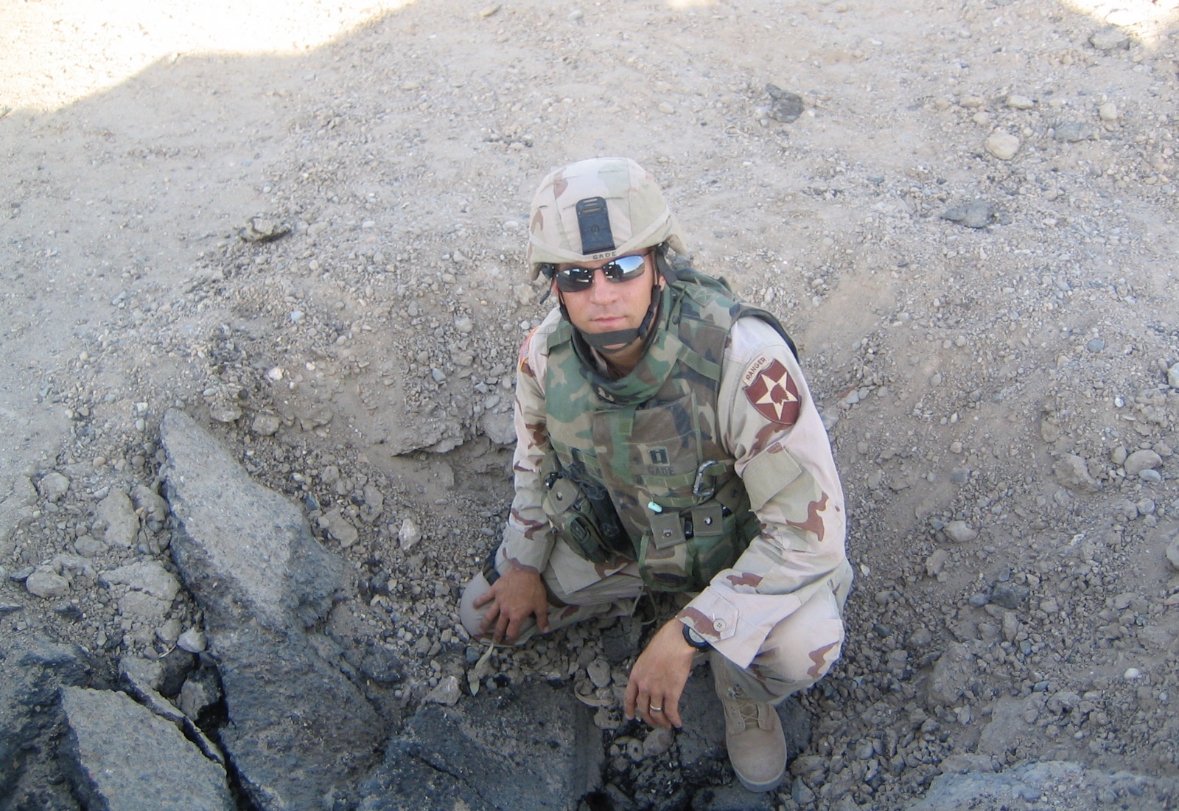
Daniel Gade survived an explosion in Iraq that should have killed him, then spent the next two decades challenging the very system designed to help wounded warriors like himself. His message is simple and shocking: the VA disability system doesn’t heal veterans, it traps them. “The government is not your dad,” he says bluntly. “You’re responsible for your own outcomes.” It’s a message that doesn’t win him many friends in veteran circles, but Gade, who lost his right leg, broke his neck and pelvis, and suffered nerve damage to his hands when his Humvee was hit on January 10, 2005, believes he’s earned the right to say what others won’t. Still, his views win high praise from some, including General Mattis and many others.
The Moment Everything Changed
Then-Captain Gade was a 29-year-old Army captain commanding a tank in Iraq when the explosion came. His loader, PFC Dennis Miller, was killed instantly, hit directly in the face. “I had responsibilities,” Gade says, his voice steady. “I was in charge of 120 guys, and I had my tank, four guys, now three. I had a whole convoy of vehicles that I had to get across a dangerous city at night. In my view, my responsibility was to keep going.”
The mission is more important than any one man. It’s a principle drilled into every military officer, and Gade lived it in the most horrific way imaginable. “Sometimes people get killed in war. That’s bad, but you can’t quit because one of your soldiers got killed. You still have to finish the mission.”
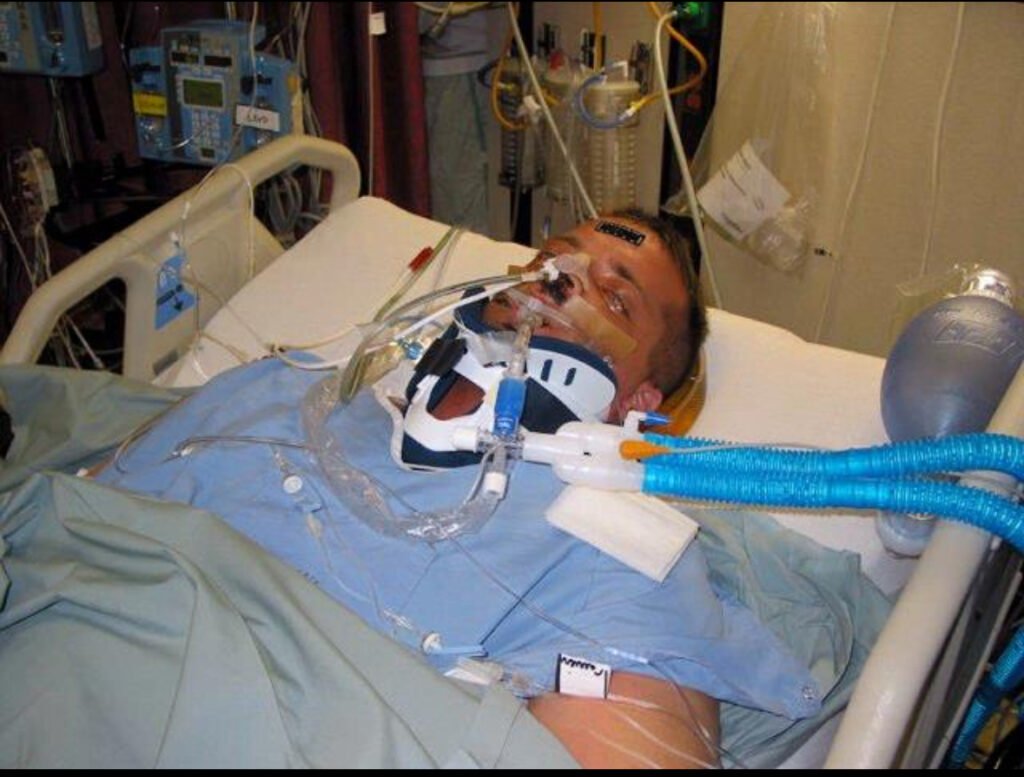
But the second time, Gade couldn’t keep going. “The time when I had to keep going was November 10, the first time I was wounded,” he says. “The second time was when I couldn’t.” After his Humvee was hit, he was medevacked to Walter Reed Army Medical Center, where he spent five months as an inpatient, fighting for his life. At the first surgical station, 25 sailors and Marines donated blood directly into his veins. Nobody asked if he was Army or Navy, officer or enlisted. They just gave what he needed. “That’s the unity I want America to have,” he says.
The Education Nobody Wants
While Gade lay in a coma at Walter Reed, his mind wasn’t safe. For three weeks, he experienced what doctors call ICU psychosis, a horrific loop of nightmares where he had to kill his father repeatedly. “When somebody is in dire circumstances, I think it’s really hopeful to think that they’re okay,” he explains. “And I wasn’t. I was there, but I was not okay.” There was nothing from the outside world that could reach him. Not his wife Wendy kissing his forehead. Not anyone holding his hand. He was trapped inside his own subconscious until his body finally released him.
When he woke up, the real education began. “What struck me most was that the rehab and the system in place around our beds encouraged veterans to be sick,” Gade says. “They reward them for staying sick and don’t reward them for thriving. Instead, they reward them for staying in an unproductive condition.” It was an observation that would shape the rest of his life.
The Wife Who Saved Him
Gade credits his recovery to one radical decision his wife Wendy made. “She came to me and said, ‘You get better. You’re the leader of this family. I need you to get better as soon as you can. I’ll take care of you until that happens.'” It was the opposite of what the VA caregiver program would later encourage, paying spouses to become full-time caregivers for their veteran husbands. “What happens when wives are put in that position is it has the effect of turning the husband into a ward or a child of the wife, instead of a co-equal partner or the leader of the family,” Gade argues.
For him, Wendy’s approach was transformative. “It gave me permission to take the time I needed to heal but also gave me the motivation to heal so that I could return to a leadership role in my family.” His three-year-old daughter, AnnaGrace, reinforced that motivation. One day she said, “My daddy can’t do anything.” Gade, with a broken pelvis and missing leg, crawled out of his wheelchair onto the floor to prove her wrong. “It reminded me that other people are depending on me. Just because something bad happens to me doesn’t mean that they’re not depending on me.”

From Patient to Policy Maker
Before his injury, Gade had accepted an offer to teach at West Point. The Army still wanted him, so he started his master’s degree the semester after getting out of Walter Reed. During his studies in public policy, he began exploring how the VA system actually works. “In public policy, if you want more of something, you compensate it. If you want less of something, you tax it,” he explains. “That’s true of everything. If you want people to slow down on the highway, you give them speeding tickets.” The implication was clear: if you compensate disability, you get more disability claims.
Then came the call that changed everything. In the summer of 2007, during the Walter Reed housing scandal, the White House asked Gade to help fix their veteran policy. As an active duty major with a fresh master’s degree and personal experience as a catastrophically wounded veteran, he was uniquely positioned to see the system from every angle. What he discovered shocked him.
“What I discovered was that veteran organizations around disability, for example, the Disabled American Veterans, that organization is structured around having as many disabled veterans as possible, because that’s how the organization gets its power,” Gade says. “That’s their fuel.” He recalls a meeting with the head of the DAV and Senator Robert Dole’s bipartisan commission to fix veteran care. “One of the things he said that stuck with me was, ‘If one veteran loses one dollar in disability compensation, the DAV is going to fight you.’ It doesn’t matter how many people you help. If one veteran loses one dollar, we’re going to fight you.”
The Numbers Don’t Lie
Gade rattles off statistics that most Americans don’t know. “There are 18 million veterans in the United States. About 6.5 million of them are disability compensation recipients. We’re paying a higher percentage of veterans for disability than ever before in American history.” Last year alone, 457,000 veterans began receiving disability compensation. But only a tiny percentage of those were combat-wounded. According to Gade, “457,000 began receiving compensation last year, but there were only 50,000 combat wounded in the entire Global War on Terror.” He argues that many of the new claims are for conditions like sleep apnea, which is often tied to obesity, or for mental health issues that may not stem from combat at all.
Sleep apnea, he points out, is rated at 50% disability by the VA and pays about $1,200 per month. “Organizations are interested in making as many things into a quote-unquote disability as possible because they get their power from having as many disabled veterans as possible.” Gade argues that PTSD and traumatic brain injury are particularly easy to fake because they share 11 out of 13 symptoms, and there are psychologists who will write disability questionnaires for $200 cash. “A high percentage of veterans seeking treatment at the VA for mental health conditions stop seeking treatment as soon as they get their disability rating,” he says, citing research. “In other words, the only thing they were seeking treatment for was the disability compensation, not trying to get themselves better.”
The Book That Made Veterans Angry
In his book “Wounding Warriors,” Gade laid out his thesis: the VA disability system creates dependency, not healing. The backlash was immediate. “When we released a project on helping veterans get into and stay in the labor market, I got about 200 or 250 emails,” he recalls. “About two to one positive over negative. The positive emails came from two types of people: veterans who had been through the system themselves and said, ‘You’re totally right. I applied for disability thinking it was going to help me live a better life. I got disability and now I can’t work. I’m sitting at home feeling sorry for myself. My life is way worse than it was.’ The other messages came from VA officials and clinicians, doctors and social workers, saying, ‘We see this all the time. It breaks our hearts when veterans don’t pursue a positive identity like you.'”

General James Mattis endorsed the book. But Gade also received hate mail accusing him of not supporting veterans. “Some people were like, ‘You hate veterans. How dare you?’ But I’m not advocating for cutting veteran benefits. I’m advocating for restructuring benefits in a way that’s actually beneficial rather than harmful.”
The Alternative Vision
So, what would Gade’s ideal system look like? “Direct cash payments should not be in the form of lifelong disability benefits,” he argues. “They should be in the form of incentives for employment. Let’s say a veteran goes out and gets a job that pays $4,000 a month. For the first year you have that job, whatever income you earn, we’re going to pay you a bonus on top of that. If you make $4,000, we’ll add another $2,000. That would have the effect of getting them to see employment as the source of their income and result in them having stronger connections with the labor market.”
Over time, you wean veterans off the bonus as they learn to provide for themselves. “Rather than paying people to remain in unproductive conditions, we can do better than that. We should put employment at the center of all our efforts.” He points to organizations like Hire Heroes USA and Team Red, White and Blue as examples of groups doing it right, helping veterans find meaningful work and build identities around positive outcomes rather than disability status.
The Personal Cost
Twenty years after being blown up, Gade is candid about where he stands. He does jiu-jitsu three times a week. He runs a contracting company. He stopped wearing his prosthetic leg because it was painful and inefficient, and he realized “I was doing it for other people.” He walks on crutches now and makes no apologies. “It’s inconvenient, but it’s not the end of the world,” he says simply.
His relationship with his body? “I’ve made peace with it.” His father, a Vietnam combat veteran, gave him advice before he deployed to Iraq that became a lifeline: “No matter what happens, I want you to promise me you won’t be bitter.” When I got blown up, I was pretty mad for maybe a couple of weeks,” Gade admits. “But I promised my dad I wouldn’t be bitter. And so when I felt that bitterness creeping in, I fought it off and made a decision: okay, this is what life is now. I’m going to make it as good as I can. And I think I’ve done a pretty good job creating a pretty good life.”
His daughter from before his deployment is now graduating this week as an Army helicopter pilot. His twin sons are younger. When asked what he wants for them, Gade quotes John Adams: “I study war so that my children can study mathematics, and so their children can study art.” Then he adds quietly, “I hope my children never have to experience what I experienced in war. I hope they never have to scrub their friend’s blood off the highway with five-gallon cans of water.”

The Questions That Haunt Him
Gade bristles at the accusation that his personal toughness makes him biased against veterans who struggle more than he did. “People without advantages are the most vulnerable and most likely to be harmed by a system which encourages them to be sick,” he counters. “I’m not biased against veterans. I’m biased against a system that harms veterans.”
When confronted with the statistic that 22 veterans die by suicide every day, and asked if they’re killing themselves because they’re not getting enough support, Gade pushes back. “I don’t think it’s a matter of too little or too much. I think it’s a matter of what kind. If we can help veterans get jobs, productive, meaningful jobs, those veterans are going to be better off than if we pay them $3,000 or $4,500 a month in disability compensation.”
He acknowledges the controversy: “Some people will read my book and say, ‘This guy’s making it harder for veterans who genuinely need help.’ But if the VA starts taking a harder look at claims, people who are faking or exaggerating will go away. That means more resources for people who actually need clinical care and treatment.”
The Mission Continues
Gade no longer wears his Army uniform. He’s not involved in politics anymore after losing a Senate campaign where his VA reform positions were never really challenged. He focuses on his contracting company and the wellbeing of his employees. But he hasn’t abandoned his mission. When asked what he wants veterans to take away from his story, his answer is immediate: “I want them to understand their outcomes are their responsibility. Never stop seeking a better life for themselves and their families. The government is not your dad. Find a better life, create a better life, and don’t quit.”
At the end of the day, when he’s alone with his thoughts, what does Daniel Gade believe about what he’s doing? “I believe that history is going to show that I was right,” he says without hesitation. “I have the courage of my convictions, even in the face of people who think that I’m wrong. I think history has already proved I’m right.”
And if his grandchildren someday ask what Grandpa’s life meant? “I served God and provided for my family,” he says. “That’s what it’s all about. If at the end of your life you can say, ‘I lived in accordance with my values, I provided for the people who relied on me, and I was brave,’ that’s a pretty good outcome for anybody.”

Resources for Veterans
Employment & Career Services
Hire Heroes USA: Home | Hire Heroes USA
Team Red, White and Blue: Team Red, White & Blue | Get Involved Today TurboVets: TurboVets | Your Mission. Our Precision.
VA Careers: Careers at VA – U.S. Department of Veterans Affairs
Veterans Advocacy & Support
America’s Warrior Partnership: Veteran Non-profit | America’s Warrior Partnership
American Legion: The American Legion | Serving Veterans, Families, & Communities Nationwide
Veterans of Foreign Wars: The Veterans of Foreign Wars of the U.S. – VFW
Disabled American Veterans: DAV : Disabled American Veterans
Mental Health & Wellness Support
Veterans Crisis Line: Dial 988, then press 1 | Text 838255
Vet Centers: Find VA Locations | Veterans Affairs
Give an Hour: Find Mental Health Services, Resources, and Education – Give an Hour
VA Benefits Information
VA Benefits: VA Disability Compensation | Veterans Affairs
Veterans Service Organizations: Find A VA Accredited Representative Or VSO | Veterans Affairs
Source References
- S. Department of Veterans Affairs. VA Annual Benefits Report 2024.
Annual Benefits Report – Veterans Benefits Administration Reports - Congressional Research Service. Veterans’ Disability Compensation: Trends and Policy Issues, Oct. 2024.
CBO Veterans’ Disability Compensation: Trends and Policy Options - RAND Corporation. Mental Health Care for U.S. Veterans: Access, Quality, and Outcomes, 2023.
Navigating Mental Health Care for Veterans | RAND - S. Department of Veterans Affairs. 2024 National Veteran Suicide Prevention Annual Report.
https://www.mentalhealth.va.gov/suicide_prevention/data.asp

About Daniel Gade
Daniel Gade is a retired U.S. Army Lieutenant Colonel, West Point graduate, and author of “Wounding Warriors: How Bad Policy Is Making Veterans Sicker and Poorer.” He was wounded in action twice and decorated for valor. He holds a Master of Public Administration and a PhD in Public Administration and Public Policy from the University of Georgia. He served as Director of Veterans Policy at the White House Domestic Policy Council under President Bush, served on VA advisory committees during the Obama Administration, served as a political appointee in the first Trump Administration, and directed the Virginia Department of Veterans Services from 2022 to 2024. He is CEO of InterFuze, a defense contracting company, and serves on the Advisory Council at America’s Warrior Partnership and is an advisor at TurboVets. He lives with his family.