

Summary
Colonel Edna W. Cummings, U.S. Army (Retired), transformed a lifetime of beating impossible odds into a mission to honor the forgotten heroes of the 6888th Central Postal Directory Battalion. From becoming the first Black woman commissioned through Appalachian State University’s Army ROTC to achieving the rank of colonel, an accomplishment reached by less than 5% of all Army officers, Edna’s 25-year military career was defined by perseverance. After retirement, she led a tireless six-year campaign that secured the Congressional Gold Medal for the Six Triple Eight, navigating bureaucracy during COVID with less than a 3% chance of success. Her memoir, “A Soldier’s Life,” captures her father’s simple wisdom: assess the situation, then give of yourself. Inducted as an honorary member of Zeta Phi Beta Sorority in 2023, Colonel Cummings continues to exemplify the principle that the odds don’t have to be good for good enough to happen.
The first time someone told Colonel Edna W. Cummings she was making history, three decades had already passed. She didn’t know she was the first Black woman commissioned from Appalachian State University’s Army ROTC program until someone mentioned it years later, almost casually, like remarking on the weather. Her response was quintessentially Edna: “Are you sure?” Because that’s the thing about pioneers, they’re too busy clearing the path to notice they’re the first ones walking it. They’re focused on the mission, on the work in front of them, on doing what needs to be done rather than contemplating their place in the history books.
The Foundation
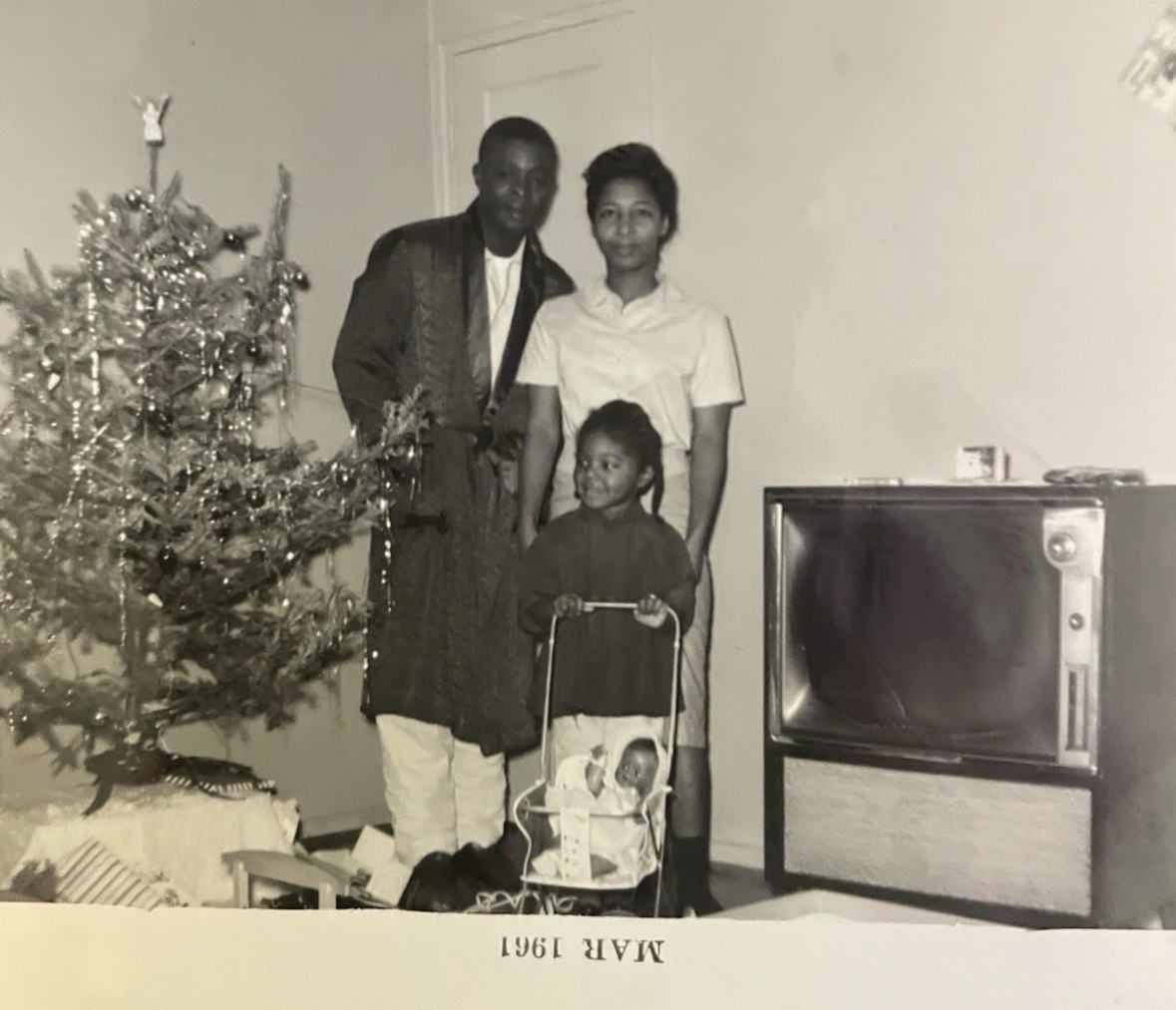
Edna grew up in a military family where service wasn’t a concept to be debated; it was oxygen. Her father, who would retire as a first sergeant from the 82nd Airborne, taught her something simple and profound: assess the situation, then give of yourself. Don’t go in blindly, but when you can help, help. It sounds almost too simple for a principle that would carry someone through 25 years of military service, through Korea near the DMZ, through warehouses of vehicle parts and motor pools, through the Pentagon’s corridors where even in uniform she sometimes wasn’t saluted, where people struggled to accept that a Black woman could be an officer. But maybe the most powerful truths are the simplest ones, the ones that don’t need elaboration to work, the ones that endure precisely because they’re uncomplicated enough to remember when everything else is falling apart.
The Loneliness of Firsts
When Edna entered the military in the late 1970s, mentorship looked different than it does today. General officers weren’t accessible. They were galaxies away, unreachable for a young lieutenant just finding her footing. So, she looked to her peers, classmates, other students, people just a few steps ahead on the same difficult path. It would be a decade before she met a general she could actually talk to, a decade of figuring things out on her own, of being the only one in the room, of soldiers under her command who had never seen a Black woman officer before. And still, she didn’t think much of it because she was there to do a job, not to make a statement or prove a point.
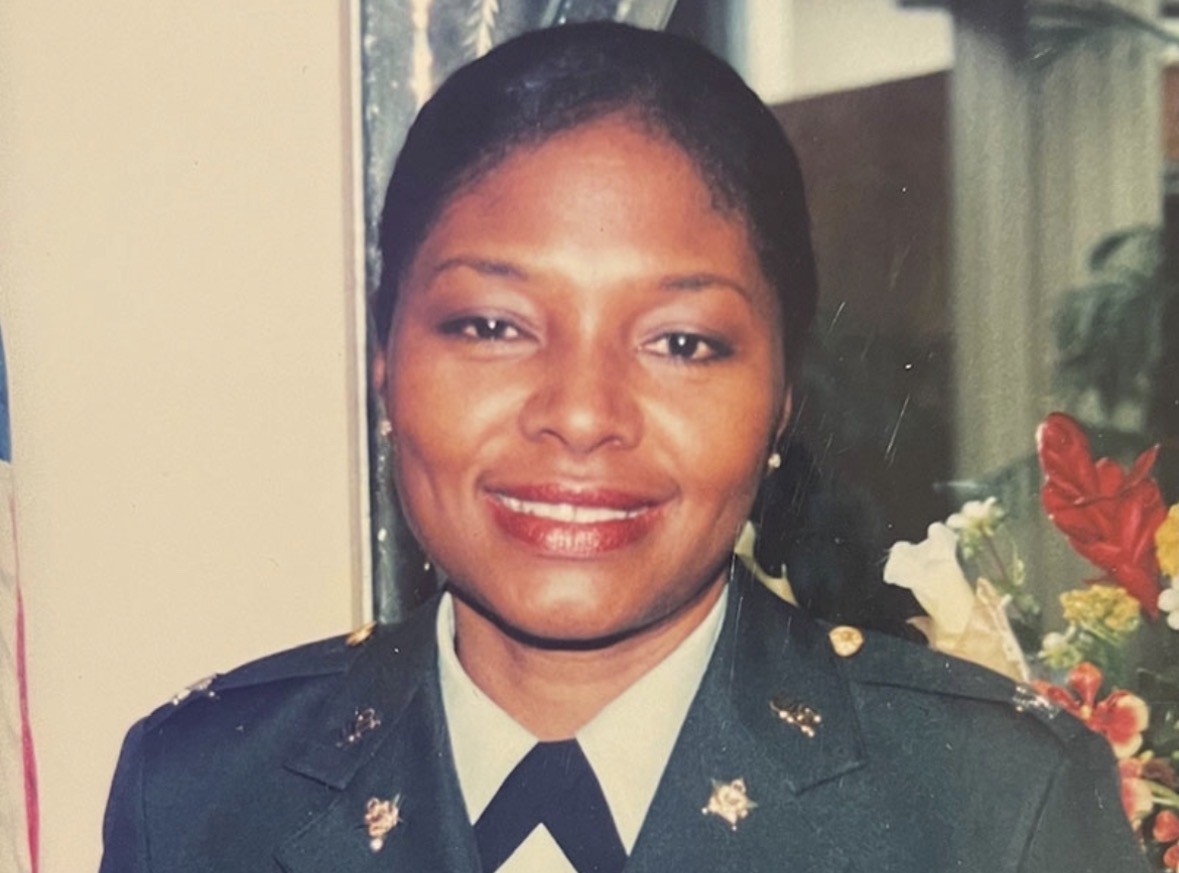
It wasn’t until she made full colonel, an achievement reached by less than 5% of all Army officers, that a three-star general congratulated her and the magnitude began to settle in. After retirement, she learned about Charity Adams, the commander of the legendary 6888th Central Postal Directory Battalion, who once said: “You don’t know you’re making history until somebody tells you that it’s history.” The words resonated because they captured exactly what Edna had experienced for three decades. She hadn’t been making history; she’d been making rank, doing her job, leading her soldiers, living the values her father had instilled in her.
The Women Who Sorted the Mail
Charity Edna Adams. A Black woman officer. Another Edna. The connection wasn’t lost on Colonel Cummings when she first learned about the 6888th’s commander, a woman who shared not just her standing as a fellow officer and her race, but her first name and the same tendency to speak her mind even when it made her supervisors uncomfortable.
When Edna Cummings discovered the story of the 6888th, the only all-Black Women’s Army Corps unit to serve overseas during World War II, something clicked. These women, the “Six Triple Eight,” had processed millions of pieces of backlogged mail in Europe under the motto “No mail, low morale.” They understood what Edna’s father understood when he wrote letters home from Vietnam on scrounged paper, switching between different sheets when he ran out, telling his family about buying a home, about championship fights, about anything from home. Connection isn’t auxiliary to survival; it’s central to it, the lifeline that keeps soldiers tethered to the world they’re fighting to protect.
The 6888th women weren’t victims waiting to be saved from their story. Eighty-five percent had college degrees or were former schoolteachers in an era when less than half of Americans had high school diplomas. They were teachers, the best and brightest, who volunteered to serve while racism and sexism tried to tell them they weren’t enough.
But these women didn’t center their story on oppression. They centered it on mission. Yes, they faced discrimination, Charity Adams certainly did, but when Edna spoke with the surviving veterans, they kept returning to the same refrain: We had a job to do. We had troops to take care of. We had a war to help win. And in Europe, they found something unexpected: freedom. They shopped in Parisian perfume stores, visited British families, traveled to Switzerland, experienced a level of respect and welcome that their own country had never extended to them. The racism and sexism didn’t disappear from their story, but it wasn’t the whole story either, these women refused to let discrimination define them or diminish their contributions.
Three Principles and a Running Pace
Ask Colonel Cummings about her leadership philosophy, and she’ll give you three things: integrity, treat people the way you want to be treated, and don’t ask your troops to do anything you wouldn’t do yourself. Then she’ll add, almost as an afterthought: show up on time and don’t fall out of a run. These aren’t the principles of someone performing leadership; they’re the principles of someone living it, day in and day out, in ways both visible and invisible. She learned from her soldiers, tried to understand their challenges, their training, their perspective, recognizing that the best leaders are often the best listeners. That attitude, she says almost dismissively, probably contributed to what people now call success, though she’d never use that word herself.
The Hardest Fight
From 2019 to 2025, Edna led the campaign to secure the Congressional Gold Medal for the 6888th. The legislation passed in March 2022; the ceremony came in 2025, but those years between inception and celebration were filled with relentless advocacy, strategic planning, and the kind of persistence that only comes from believing in a cause larger than yourself. The historical case was solid: these women had served with distinction, processing an estimated 17 million pieces of mail in Birmingham, England, the worst of the backlog, in just three months, working in unheated buildings, then continuing the work in Rouen and Paris, France, breaking through barriers that shouldn’t have existed. After Birmingham, they moved to Rouen and then Paris to clear those backlogs, proving they deserved recognition was never the hard part; everyone who learned their story understood their valor.
The hard part was the bureaucracy. Getting members of Congress to co-sponsor meant making the 6888th’s story matter to representatives and their constituents across different districts and states, connecting individual lawmakers to a piece of history that might seem distant from their daily concerns. What saved the campaign was the Afro American newspaper, which had published where the women lived, what cities they came from, creating a database of hometowns that became a roadmap for advocacy. Senator Jerry Moran from Kansas, home of the Buffalo Soldiers and Fort Leavenworth, became a champion who understood the significance immediately. The House of Representatives was harder, a district-by-district climb that required patience, strategy, and unwavering commitment. And Edna did much of this work during COVID, navigating a pandemic while fighting for recognition that was eight decades overdue.
When she started, the Congressional Gold Medal had less than a 3% chance of passing, but she’d beaten those odds before. The recognition didn’t stop there either. The President signed legislation dedicating two post offices in honor of the Six Triple Eight veterans, and several states proclaimed Six Triple Eight Days, creating touchpoints across the country where their story could be told and retold. The nation was finally learning to say their names, to tell their story, to honor what had been overlooked for eight decades.
The Mathematics of Perseverance
Less than 10% of African Americans were in college when Edna started at Appalachian State. Less than 5% of Army officers make colonel. Less than 3% chance the Congressional Gold Medal legislation would pass. When Edna entered college, her mother’s friend said it plainly: “You ain’t gonna make it around them white folks. They gonna run her off that mountain.” But here’s what Edna learned through a lifetime of defying expectations: the odds don’t have to be good for good enough to happen, and sometimes the longest shots are the ones worth taking.
The book she eventually wrote, after first drafting it as fiction in 2016, after being convinced by author Retired Major General Mari K. Eder that her story mattered, carries the working title that became her life’s thesis: “The Odds Ain’t Good, But Good Stuff Happens.” It’s broken into three sections that mirror the statistics of her life: Less Than 10%, Less Than 5% Chance, Less Than 3% Chance. Each section represents a moment when the world told her no, and she found a way to yes anyway.
What the Military Doesn’t Teach You
After 25 years of service, Edna retired from a world of structure, support systems, and clearly defined roles. She had commanded, led, served in Korea, worked at the Pentagon, risen to colonel. She’d had staffs and drivers and people to remind her where to be, an infrastructure that made the complex machinery of military life function smoothly. Then came civilian life, where she had to maintain her own calendar and kept missing meetings because nobody called to remind her, where she had to drive herself places, where the camaraderie and the sense of someone watching your back became something more dispersed, more self-sustaining.
She went to community college to learn Excel, Microsoft Project, Visio, basic skills her staff had always handled, practical knowledge that civilians take for granted but military officers often delegate. A general at a transition seminar admitted he’d gotten in the back seat of his car and yelled about why it wasn’t moving before realizing he had to drive himself now, a story that made Edna feel less alone in her adjustment struggles. These small indignities of independence became the price of no longer being part of the machine, the trade-off for autonomy after years of institutional support.
The Letter and the Legacy
Edna donated some of her father’s letters from Vietnam to the Army Heritage and Education Center in Carlisle, knowing they contained more than just family history. They held contextual history from the Tet Offensive, mentions of people from his hometown, the texture of a moment that helped shape who his daughter would become. The letters, written on whatever paper he could find, sometimes switching mid-page when supplies ran short, represented the kind of connection that transcends time and distance. Mail still matters, even now. Connection still matters, even now. The 6888th knew it in the 1940s when they worked around the clock to get letters to soldiers who desperately needed that link to home. Edna’s father knew it from Vietnam, where a letter could be the difference between hope and despair. We know it now, even if we call it texting or email or video chat instead of handwritten letters on scrounged paper. Some things don’t change because they can’t, they’re too fundamental to human nature, too essential to what keeps us tethered to each other across whatever distances separate us.
A Circle of Service
In September 2023, Edna was inducted as an honorary member of Zeta Phi Beta Sorority, Incorporated, at Howard University. It was a recognition that connected her work to a broader sisterhood of service, women who understood what it meant to open doors, to advocate, to persevere.
As an honorary member, she contributes to Zeta Phi Beta’s Military Appreciation Program, and supports their scholarship programs. The sorority recognized in her what the Six Triple Eight embodied: excellence, service, and the refusal to be diminished by circumstance.
It’s fitting. Edna had spent years honoring the legacy of Black women who served in uniform. Now she was being welcomed into a sisterhood that continues that tradition of scholarship, service, and finer womanhood.
Give Yourself a Chance
Near the end of her interview, Edna shares the moment that defined her Congressional Gold Medal campaign, the question that pushed her past her reluctance to engage with bureaucracy. She didn’t want to work with Congress, didn’t want to navigate that labyrinth of committees and co-sponsors and political calculations. But a retired general officer friend asked her one question that changed everything: “How would you feel if you didn’t at least try?” It’s the question that haunts every dream deferred, every path not taken, every risk deemed too risky. How would you feel if you didn’t try? What regrets would you carry if you let fear or doubt or the probability of failure stop you from attempting something that mattered?
Edna’s answer was to try, to give herself a chance, to let good enough happen even when the odds weren’t good. She wasn’t the first Black woman commissioned from Appalachian State’s ROTC program because she wasn’t trying to be first; she was first because she showed up and did the work. She didn’t make colonel to beat statistics or prove people wrong; she made colonel because she led with integrity, treated people right, and showed up. The 6888th didn’t go to Europe to make history; they went to do a job, to sort the mail, to connect soldiers with home, to serve their country even when their country didn’t fully recognize their humanity. History happened anyway, the way it always does, not to people performing greatness for an audience, but to people doing the work that needs doing, showing up when it matters, persevering when others would quit.
About Colonel Edna W. Cummings
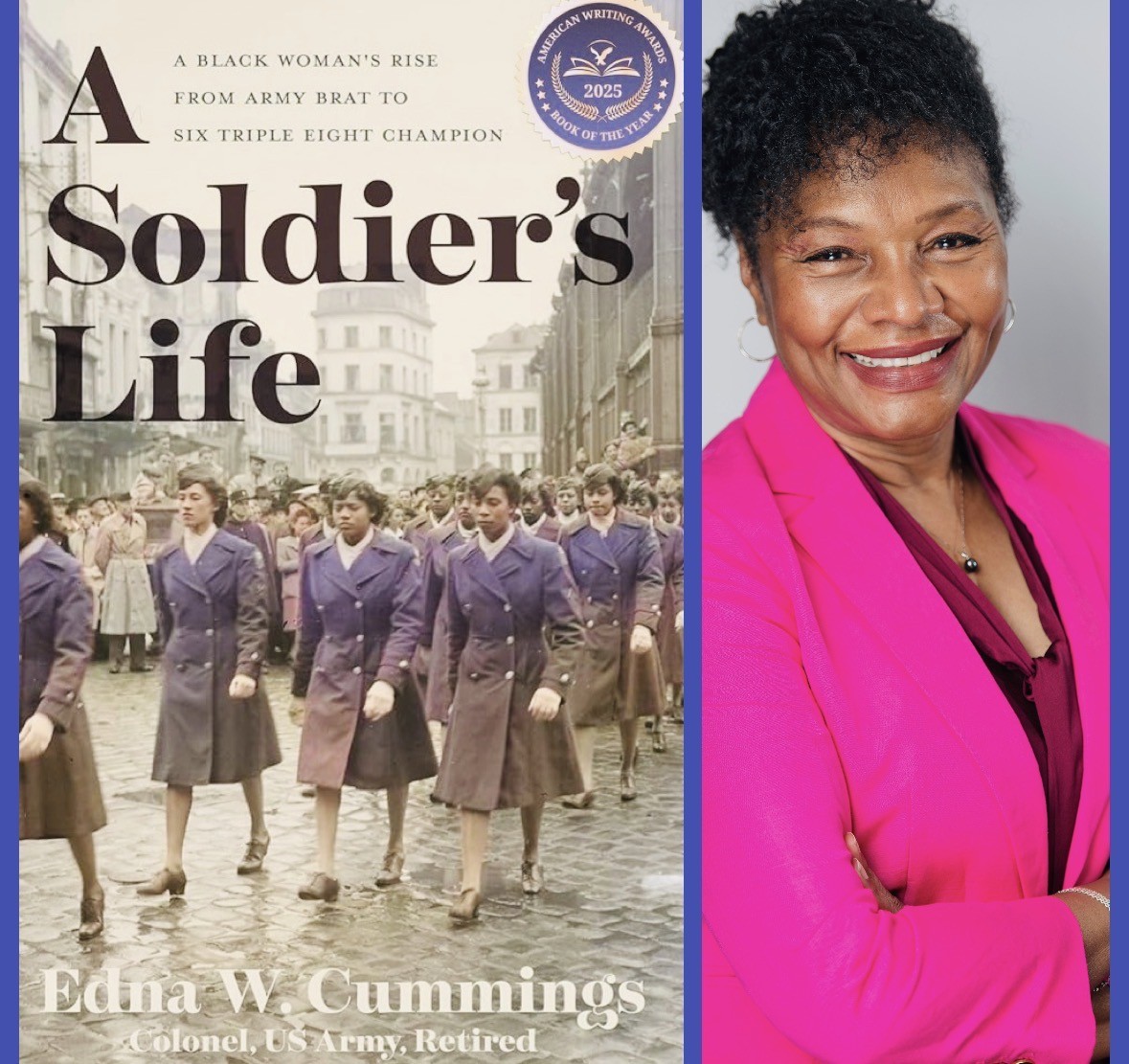
Colonel Edna W. Cummings retired after 25 years in the U.S. Army, serving in Korea near the DMZ, at the Pentagon, and rising to the rank of colonel, an achievement reached by less than 5% of all Army officers. She is the first Black woman commissioned through Appalachian State University’s Army ROTC program. Following retirement, she led the six-year citizen advocacy campaign that secured the Congressional Gold Medal for the 6888th Central Postal Directory Battalion, the only all-Black, all-female unit to serve overseas during World War II. President Biden signed the legislation on March 14, 2022. Colonel Cummings was inducted into the Army Women’s Foundation Hall of Fame in March 2020 and was named a National Changemaker by the Military Officers Association of America. In September 2023, she was inducted as an honorary member of Zeta Phi Beta Sorority, Incorporated, at Howard University. Her memoir, A Soldier’s Life, was published in 2025.
Resources & Further Reading
Colonel Edna W. Cummings
Memoir: A Soldier’s Life by Colonel Edna W. Cummings https://ednacummings.com
Zeta Phi Beta Honorary Membership: Watch The Yard https://www.watchtheyard.com/zetas/retired-u-s-army-colonel-edna-cummings-joins-zeta-phi-beta-as-honorary-member/
Army Women’s Foundation Hall of Fame https://www.armywomen.org
Army Heritage and Education Center https://www.armyheritage.org
The 6888th Central Postal Directory Battalion
Congressional Gold Medal: Legislation signed March 14, 2022, ceremony held April 29, 2025 https://www.congress.gov/bill/117th-congress/senate-bill/321
Netflix Film: The Six Triple Eight, directed by Tyler Perry https://www.netflix.com/tudum/articles/tyler-perry-new-netflix-movie-six-triple-eight
The Afro American Newspaper Archives https://afro.com/section/archives/
Buffalo Soldier Park Monument, Fort Leavenworth, Kansas https://www.leavenworthks.gov/visitors/page/buffalo-soldier-monument
Senator Jerry Moran https://www.moran.senate.gov
Books Referenced
One Woman’s Army: A Black Officer Remembers the WAC by Charity Adams Earley https://www.tamupress.com/book/9780890966945/one-womans-army/
Veteran Excellence Magazine celebrates outstanding leadership, service, and the preservation of military history.