

Summary
Timothy Ross is a Tax Partner in Government Contracting and Technology Industries at Withum, where he advises government contractors, private equity firms, and professional services companies on some of the most complex transactions in the Washington, DC market. He has spent three decades in public accounting and advisory, including four years at Withum in the DC market, building a career that runs from Big Four roots in Fort Wayne, Indiana, through the government contracting ecosystem of the capital region. Before any of that, he was a Marine. He served with the 8th Engineers, 2nd Force Service Support Group, deployed to the Persian Gulf in 1991 as a reservist who got married seven days before he left. During his deployment, he found himself attached to the 2nd Marine Expeditionary Force. The news media and experts were predicting 5,000 casualties. He went anyway. The training he received in the Marine Corps is the architecture underneath everything that followed.
Seven Days Before
He got married seven days before he left. Not because he was certain he’d be coming back. Because he wasn’t. The military was predicting 5,000 casualties. As a Marine in an engineering unit, one of the first ones in, Timothy Ross looked at those numbers and drew a straight line. “I thought there was a good chance of me becoming a casualty,” he says. “I really did.” He talked it through with his then-fiancee. They decided to get married. A week later he was on a Northwest Airlines flight to Al-Jubayl, Saudi Arabia, carrying his weapon on board, which he notes was the only time in his life that was ever permitted on a commercial aircraft.
His unit moved west through the desert to a staging area near Al-Khafji, about seven miles from the Kuwaiti border. He was a platoon sergeant in the mobile electronics platoon, responsible for generators and the power infrastructure that kept the force operational. He also found himself attached to a combat engineer battalion. The berm separating Saudi Arabia from Kuwait was right there. On the other side were forces that, at the time, he figured wanted to kill him. “There was still hope there wasn’t going to be a war,” he says. “But we were already ready.”
What he remembers most clearly isn’t the combat or the danger. It’s the separation. There was no email. The nearest phone was six hours away and not free. Communication with family was mail. Old school letters, asking for things to be sent over, waiting weeks for a reply. He went from being a college student to sleeping in a tent in the desert, and the isolation was its own kind of weight. “Nobody’s happy about being separated,” he says. “Nobody’s happy about being there.”
“The Marine Corps taught me that you can handle a lot more than you think you can. And that goes for anybody.”
What carried him through was training. The Marine Corps had done its job so thoroughly that once he was on the ground, the thinking stopped and the doing took over. “Once you get there, you just sort of go on auto,” he says. “You’re doing your job. Doing what needs to be done.” He credits the Corps with something that goes beyond tactical preparation. It’s a psychological rewiring. A recalibration of what the human nervous system is capable of absorbing and continuing to function through. “The Marine Corps taught me that you can handle a lot more than you think you can. And that goes for anybody, whether you’re a Marine or not.”
How a Marine Ends Up in Tax
The path from the Gulf War to a partner’s office at a national accounting firm isn’t obvious. Ross will tell you it wasn’t exactly planned. His first major was business administration, and he took two required accounting courses and only dropped a single point. “I was like, this is easy,” he says. “So I changed my major to accounting.” He is quick to add that he never wanted to be an accountant. He wanted to be a Marine Corps officer. He went through Officer Candidates School at Quantico. When the Gulf War came, he had a choice. The Corps could have held him back. He said no. “I didn’t want to be home,” he says. “I was going to go with my unit.”
When he came back, he made a practical call: use the accounting degree, go into public accounting, and pick tax over audit because tax was more creative. He did an internship with a tax-only firm in downtown Chicago and loved it. When offers came in, one was from Coopers and Lybrand, now PricewaterhouseCoopers, for a position in Fort Wayne, Indiana. He took it. He was older than the standard hire. He had a military background. He was, as far as he could tell, the only person in that office who had actually served.
From Fort Wayne he moved through Clifton Gunderson, which became CliftonLarsonAllen, and built relationships inside a professional network that overlapped significantly with Withum. When he started looking for a firm where he could help grow a presence in the DC market, he Googled Withum, found they had an office, and within a week had an offer and said yes. What pulled him there was culture. Entrepreneurial, relationship-driven, already full of people he knew and trusted. “I knew what I was getting into,” he says. “You don’t know perfectly. But that’s some of the frustration, and a lot of the fun.”
What Actually Kills a Deal
In the M&A world, most deal post-mortems blame strategy. Some blame valuation. The sophisticated ones blame culture, and Ross will tell you they’re right, but not for the reason most people think. “Culture kills deals,” he says. “Everybody says that. But it is true.” The problem is that culture’s easy to hide. Unless you’ve worked inside a company for at least a year, you’re not going to know what you’re walking into. You are relying on what people choose to show you, and what they choose to show you is curated.
The red flags, when they appear, tend to look like one of two things. Either someone is dangerously detached from the operational details, floating at altitude without accountability, or someone is so buried in the granular that they cannot see the strategic picture and will drive the people around them to exhaustion trying to follow. Neither one survives integration. “There has to be a middle ground,” he says. “And if somebody is just beating up on the detail from a cultural standpoint, that can drive employees nuts. If people don’t pay attention to that, it becomes apparent.” Just never in time to stop the closing.
“Culture kills deals. Everybody says that. But it is true. And it is kind of easy to hide.”
The second thing that consistently goes unasked is integration. Ross has watched it happen over and over. A firm acquires a business, has a clear thesis for why the combination creates value, and has no real plan for how the two organizations actually become one. Nobody asked. “I haven’t seen a lot of plans to integrate a new business or a new tack-on,” he says. “People are willing to pay money for that. But the plan for how you actually do it is often not there.”
For Ross, whose work is on the tax side of deal structuring, the integration question has a specific and measurable answer. In a professional services firm, the two biggest compensation and benefit priorities are pay and tax. Those two things. If the integration plan does not address tax structure from the beginning, you are leaving money on the table that the combined entity is going to feel. “From a dollars and cents perspective,” he says, “that is where you should focus.”
He keeps perspective on all of it with a line that functions, for him, as a kind of internal regulator. “I always have to remind myself, and I always remind the team: nobody died.” It is not surgery. The stakes are real. The pressure is real. The client’s anxiety about penalties or losses or a deal that does not close is real. But it is not life or death. He has been somewhere that was. The calibration stays with him.
“Nobody died. It is not surgery. It is serious. But let us take a step back.”
Government Contracting Is a Different Kind of Trust
Ross has advised clients in life sciences, technology, manufacturing, and professional services. Government contracting is its own world. The reason is not just regulatory complexity, though the complexity is real: cost accounting standards, FAR compliance, wrap rates, security clearances, status categories for veteran-owned, service-disabled, and small disadvantaged businesses. The reason is consequence. Government contractors are generally doing things for agencies performing work on behalf of citizens. “The stakes are much higher,” he says. “If they’re contracting with Homeland Security, that’s a big deal.”
That changes the trust relationship entirely. A professional services firm can make a strategic error and absorb the loss. A government contractor that blows a compliance requirement can blow the contract. And in some cases, because contracts are written to require ongoing compliance with taxing authorities, the downstream consequences extend well beyond the deal itself. Ross has seen it. He has had clients whose businesses no longer exist because of shifts in government program funding. He has had clients caught up in situations involving fraud or employee misconduct. He feels those losses. “They’re still my friends,” he says. But the only way to serve them well is to keep his ethics intact and his professional judgment clear, because emotion and judgment, in his experience, do not coexist cleanly.
“Incompetence is one thing. But to be unethical is totally different.”
His ethics line is not abstract. It comes with a specific context. He knows the DC metro market. He knows what happens to people in this ecosystem who try to juice their rates, fail to deliver contracted services, or structure deals to obscure exposure. “They end up in jail,” he says, with the matter-of-factness of someone who has watched it happen. “Or they end up paying amounts back to the government plus fines. And from a Marine veteran standpoint, it goes against everything we stand for. You want to be doing things correctly. Incompetence is one thing. But to be unethical is totally different.”
Private equity has moved aggressively into the government contracting space, drawn by the scale and the predictability of government revenue. Most PE firms understand the revenue. Fewer understand what they’re actually acquiring: the compliance architecture, the clearance infrastructure, the program relationships, the status certifications that determine which contracts the company can pursue. Ross is direct about what that misreading costs. Integration that skips the compliance question doesn’t stay skipped. It surfaces, usually after close, usually expensively.
The Rooms Where This Work Happens
Three decades in public accounting, fifteen of them in the DC market, means years of watching how this particular city builds trust. Ross is a member of the Economic Club of Washington DC, a room that holds former cabinet members, global CEOs, and policy architects. He has worked alongside government officials, regulators, and senior military leadership. He has also maintained the network that any Marine maintains: a few weeks ago he was at a symposium where four Marines got together and told stories. His brother served thirty years and saw multiple wars. The Marine Corps Memorial in Arlington carries both of their wars. “It is another family,” he says. “Marines call each other Marines.”
What the DC market taught him, beyond technical expertise, is that the relationship outlasts the deal. In government contracting especially, a client relationship that lasts four or five years ends when the company sells, and then it continues in whatever the principal does next. “Nobody starts a business anymore to give it to their children,” he says. “They’re going to cash out at a certain point.” The advisor who’s been a trusted long-term partner is in the room for the next transaction too.
Ross also volunteers with Friends of Guesthouse, which supports formerly incarcerated women reentering the Northern Virginia community.
What the Marine Would Think
If the reservist who flew into Al-Jubayl on a Northwest Airlines flight with a weapon in his lap, seven days married, convinced he might not come home, could see the career Timothy Ross built over three decades in one of the most complex deal markets in the country, Ross thinks he’d be surprised by the specific shape of it. Not by the discipline or the outcome orientation or the willingness to operate under uncertainty. Those the Marine already had. What would surprise him is the flexibility. The jungle boots the Marine Corps issued during the Gulf War were Vietnam-era design. Other branches had brown boots adapted for desert terrain. The Marines had black boots. After the war, he was told the Iraqis called Marines Black Boots as a nickname. You wore what you had. You adjusted to the conditions and you kept moving.
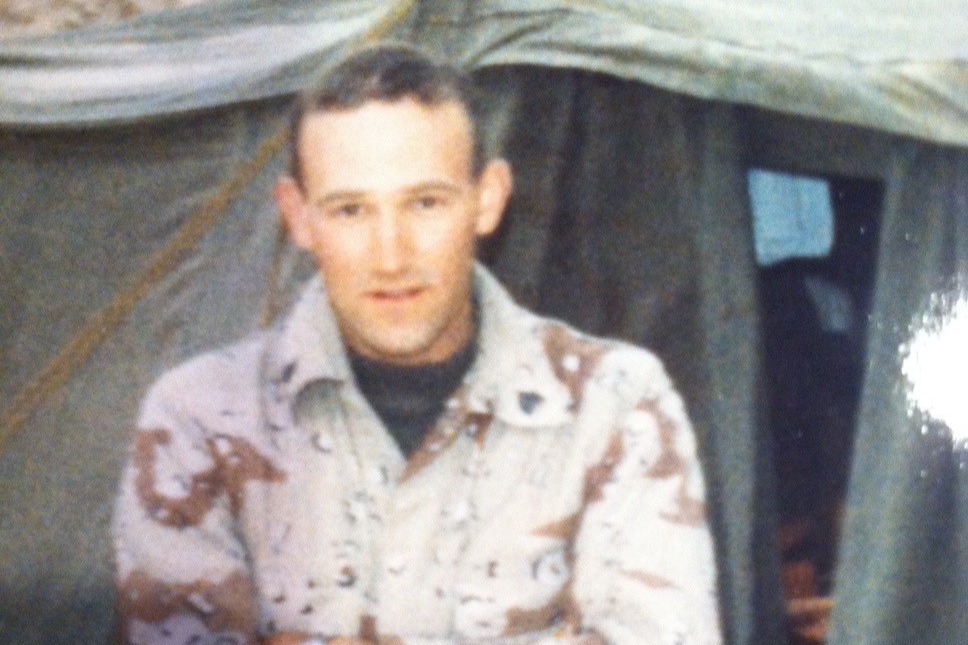
Ross during his deployment to the Persian Gulf with the 8th Engineers, 2nd Force Service Support Group, Operation Desert Storm, 1991.
Photo courtesy of Timothy Ross.
“The Marine Corps taught me flexibility. You just deal with what you’ve got.”
That’s, in the end, what three decades of tax advisory in the DC market looks like. The deals change. The clients change. The regulatory environment shifts. The technology that made the Gulf War feel sophisticated at the time looks rudimentary now. What stays constant is time. “Time is constant,” he says. “Same then, same now. You only have so much of it.” He moves accordingly. Defined end state. Clear purpose. Get it done. Stay flexible. Delegate. The Marine Corps gave him those tools in 1984. He has been using them every day since.
Reporting Notes and Public Links
Withum
withum.com | https://www.withum.com
National advisory and accounting firm with specialized practices in M&A, international tax, and government contracting.
Friends of Guesthouse
friendsofguesthouse.org | https://www.friendsofguesthouse.org
Nonprofit providing housing, employment support, and reentry services for formerly incarcerated women in Northern Virginia.
Withum Government Contracting Practice
withum.com/industries/government-contractors | https://www.withum.com/industries/government-contractors
Advisory services for government contractors navigating FAR compliance, M&A transactions, and cost accounting standards.
ABOUT TIMOTHY ROSS
Timothy Ross is a Tax Partner in Government Contracting and Technology Industries at Withum, where he focuses on government contractors, professional services firms, and private equity transactions in the Washington, DC market. He began his public accounting career after serving in the United States Marine Corps Reserve from 1984 to 1996, including activation and deployment to the Persian Gulf during Operation Desert Storm with the 8th Engineers, 2nd Force Service Support Group. He holds a degree in accounting and has spent thirty years building a practice at the intersection of tax strategy, deal structure, and government contracting compliance as a licensed certified public accountant (CPA). He is a member of the Economic Club of Washington DC and supports Friends of Guesthouse. He lives in Arlington, Virginia.
Learn More | veteranexcellence.org
Veterans Excellence Magazine profiles veterans in post-service leadership across every industry.