
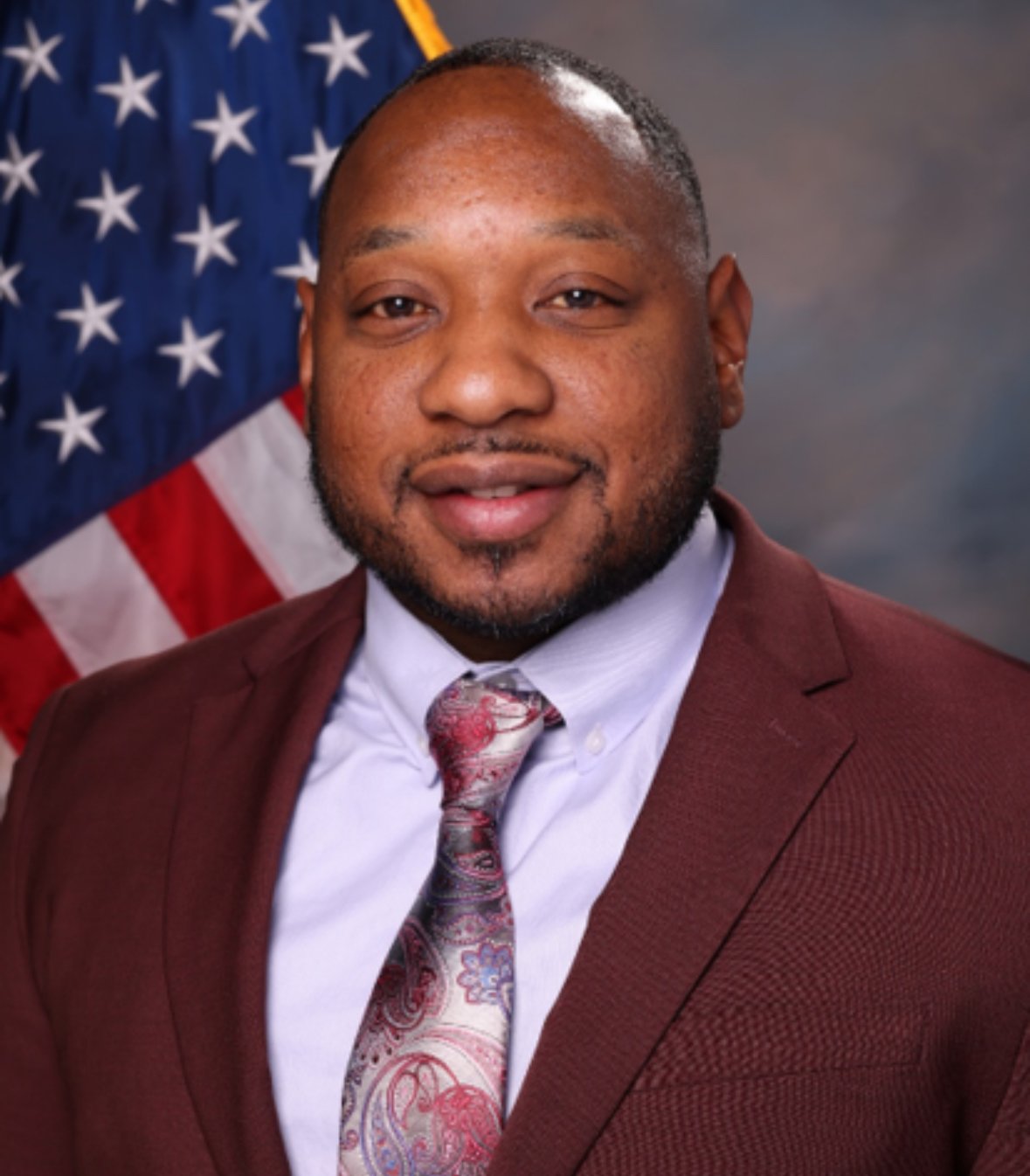
By Camille D. Ford | Veterans Day Special Feature | November 2025
Summary
Rory Thompson, Chief of Veteran Experience at VA Tennessee Valley Healthcare System (TVHS), transforms a journey marked by four suicide attempts, three divorces, and nine years of unacknowledged Post Traumatic Stress Disorder PTSD into a mission to save veteran lives. The Marine Corps veteran and son of a pastor uses his story as fuel, leading veteran satisfaction initiatives that have helped TVHS achieve 93% trust ratings and five-star status. His philosophy: PTSD doesn’t control him, he controls it. And every veteran he helps stay alive validates why he’s still here.
Rory Thompson was 18 years old with a two-year-old daughter when he saw the Marine Corps commercial that changed everything. The one that said if you want to be among the best, this is where you prove it. He didn’t tell anyone he was joining. Not his father, the pastor. Not his mother, the nurse. Not his siblings or his best friend. He just drove straight to the recruiter’s office and signed the papers.
Two weeks before he left for boot camp in December 2001, he finally told his family. They all sat on the couch crying together: his mother, his sister, his brother, and him. If someone had asked 18-year-old Rory why he was crying, he would have scoffed. “What are you crying for?” Because at 18, admitting vulnerability wasn’t an option. At 18, he thought joining the Marines would prove to everyone who said he’d never amount to anything that they were wrong.
At 44, Rory Thompson knows the truth. He was trying to prove it to himself.
Now, as Chief of Veteran Experience at Tennessee Valley Healthcare System (TVHS), Thompson uses everything he survived to save other veterans’ lives. Four suicide attempts. Three deployments to Iraq. Nine years of untreated PTSD. The moment his daughter’s voicemail stopped him from driving off a bridge. All of it has become the foundation of his mission. “God gave me everything I needed,” he says simply. “I use it to be the best version of me for me and for every veteran who walks through our doors.”
The Preacher’s Kid
Growing up as the eldest of three children in Angleton, Texas, Rory Thompson lived in a spotlight he never asked for. His father got his first church at 21, when Rory was just a year old, and that small-town congregation became family in every sense that mattered. His best friend since they were both one year old. The families who raised him alongside his parents. The community that taught him everything about service and sacrifice. It was a blessing, but it was also a curse.
Being a preacher’s kid meant everyone was always watching, always expecting. His brother and sister made straight A’s. His best friend made straight A’s. Everyone was expected to do wonderful things. Rory was the class clown who calculated exactly what scores he needed to pass each semester and got precisely those scores. No more, no less. “My father would tell me, ‘Sometimes people that struggle in life are the ones that become the most successful,'” Thompson recalls. Looking back as a father himself, he understands his dad was using motivation the only way he knew how. “We don’t get God’s book for how we raise our children. We do it the best way we know how.”
His father also told him he wasn’t good enough, that he wouldn’t amount to anything. Ironically, all the people expected to do wonderful things went one direction. Rory went another. “Not saying I’m better than them, but the direction their lives went and the direction my life went were opposite,” he reflects. “I make more than all of them put together now.” But that knowledge came later. At 18, watching that Marine Corps commercial with a toddler daughter at home, Rory Thompson was looking for something else entirely. He was looking for a way to prove his worth, not to his family, but to himself. He wanted the hardest challenge he could find because, as he puts it, “I didn’t want anything if it was easy. I didn’t want anything given to me.”
The day the Marine recruiter came to his house, Rory’s father sat down and listened to the pitch about how the Marines would make a man out of his son. Then his father stopped the recruiter mid-sentence. “Listen, you don’t have to worry about him being a man,” his father said. “He’s already prepared for whatever you’re going to throw at him. You have a slogan that says, ‘The few, the proud.’ You’re already getting the best. So whatever you’re getting ready to do, you’re just going to enhance what he’s already prepared for.”
At the time, Rory didn’t understand what his father meant. But in boot camp, when drill instructors were yelling and screaming, when everything was designed to break recruits down and rebuild them, Rory related it all to things he’d already experienced growing up. “The yelling and screaming didn’t bother me because I just acted like it was my mother and father,” he says with a knowing laugh. Boot camp operated on a simple cycle: Monday through Thursday, they taught you something new. Friday, you had to qualify at it.
Rory went to boot camp in December 2001, and for Christmas, his mother sent him a Bible with an inscription that would become his lifeline: “Whatever you’re going through, read Psalms 27 and pray. That’ll get you through it.” Every week followed the same pattern. Monday through Thursday, Rory struggled with whatever they were teaching. He failed at it, couldn’t do it, felt like he’d never get it right. Then Thursday night came, and he read Psalms 27 and prayed. “When I tell you, every Friday, not only was I qualifying, but I was also excelling, knocking it out of the park,” he says, the wonder still evident in his voice years later. His father had been right all along. Rory was already prepared for whatever they threw at him. He just needed to go through the journey himself to see it.
Sept. 11, 2001
Rory had been at Cherry Point, North Carolina for exactly two weeks when everything changed. He was still learning his job, still adjusting to military life, still figuring out who he was going to be as a Marine. Then a red-headed corporal came running through screaming words that would alter the course of his life: “We’re going to war!” It was Sept. 11, 2001.
“I joined the military not to go to war,” Thompson states flatly. “I joined the military to make a better life for my family. And here I am, as soon as I get to Cherry Point, something pops off. That’s not what I signed up for.” The base shut down immediately. He went from learning his everyday job to guarding the base 12 hours a day, standing post with a rifle, watching for threats he could barely comprehend. Then his wife called with news that shattered what little stability he had left. She wasn’t bringing their daughter to North Carolina. Everything Rory had done, every sacrifice he’d made, had been about creating a better life for his family. “For her to tell me that, after I’d made this life-altering change, I was just done,” he explains. “This was the first time I’d been away from home. I’d had enough.”
He locked himself in his room with his rifle and called his mother. He told her he couldn’t go any further. Somehow, and he still doesn’t know exactly how she managed it; his mother grabbed another phone and called his recruiter. Ten minutes later, military police were at his door. It was his first suicide attempt. His command told him he was weak. Nobody took him under their wing. Nobody talked about mental health because in the Marine Corps, at least in those days, mental health struggles were viewed as weakness. “If you say something, you won’t be able to handle what we have for you,” Thompson explains. So, when they took him to the hospital, he said just enough for them to release him. He pretended he was okay when he wasn’t okay at all. “I was untruthful because I knew what would happen if I told the truth.”
Looking back now, Thompson doesn’t see that response as a horrible injustice, though he acknowledges the system failed him. “I wouldn’t be where I am now if I hadn’t gone through those things to understand the magnitude of what I did and didn’t do and how the Marine Corps looked at mental health at the time,” he reflects. “It took a lot for me to open up, and this is post-military career, but now I see it as an opportunity for those in the military now to be upfront and honest about their mental health journey. It’s not looked at as weakness anymore. It’s actually very strong to admit you have mental health problems.”
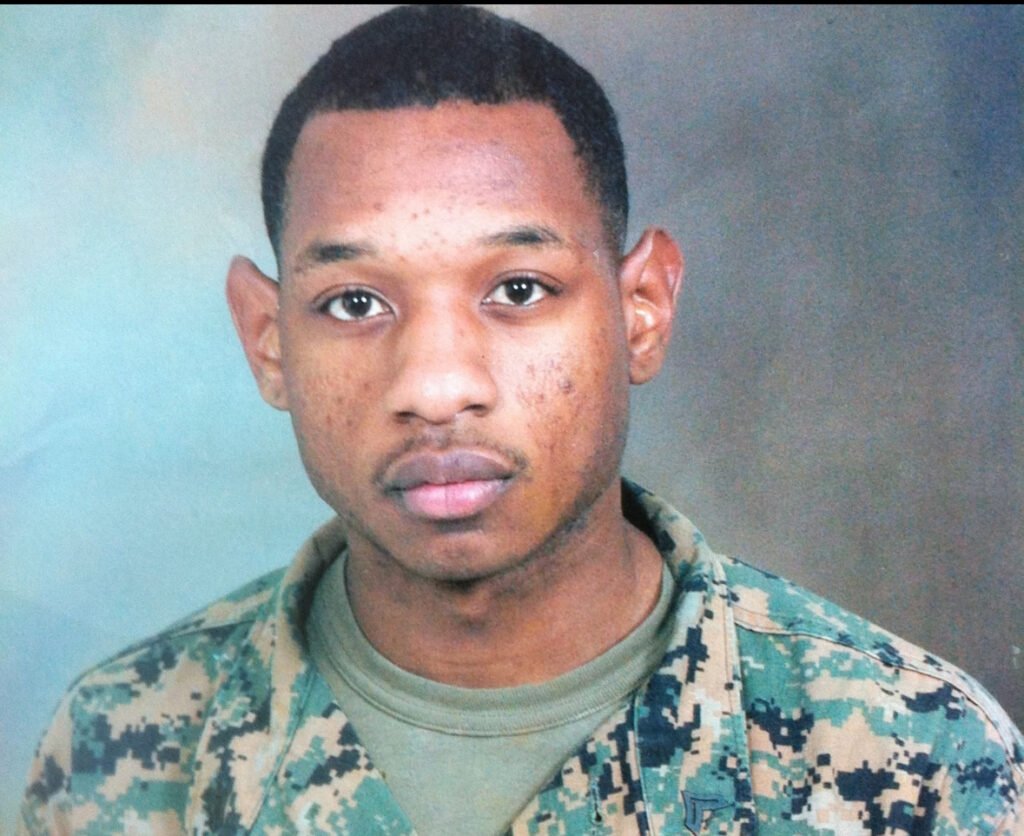
Three Deployments to Iraq
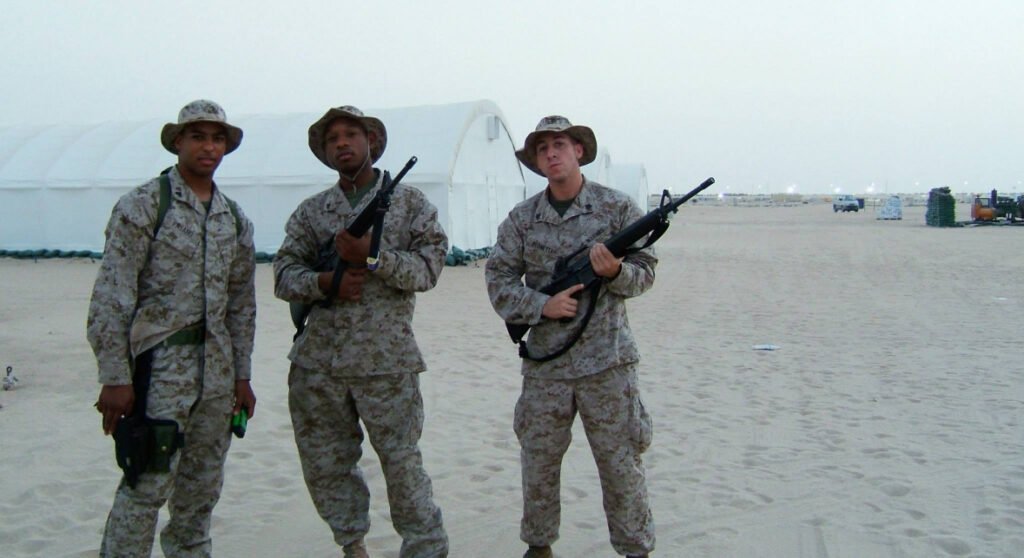
Thompson deployed to Iraq three times, and each deployment carved away another piece of the young man who’d driven to that recruiter’s office thinking he could prove something. The first time, in January 2003, his ex-wife’s birthday, he remembers standing in Norfolk, Virginia, looking up at the USS Bataan and feeling fear unlike anything he’d experienced before. It was his first time seeing a naval ship, this massive vessel that would carry him into uncharted territory where he didn’t know if he’d return. On that ship, somewhere in the theater of Iraq, Iraqi missiles came at them. General quarters sounded, not a drill this time, and everyone started running. Thompson watched them scatter and thought, “Where are you going? If we get hit, we’re going to get hit. What are you running for?” They didn’t get hit. God saw fit for them to return. His second deployment followed a similar pattern.
The third deployment was different. He was on land in Al Asad, Iraq, and that’s where he saw someone die for the first time. He won’t talk about the details, doesn’t want to trigger anyone who reads his story, but he’ll tell you what it did to him. “My mother, being a nurse worked at MD Anderson cancer hospital. My father being a pastor, I went to I don’t know how many funerals growing up. I lost count,” Thompson explains. “So, when I say it became second nature, seeing death became a part of my everyday life.” Just months ago, in August, one of his best friends committed suicide. When people tell him it’s horrible, it’s shocking, he nods. But inside, he knows the truth. “That’s a part of my everyday life now. Whether somebody commits suicide or I witnessing somebody die, it’s second nature to me. And the crazy thing about it is, it shouldn’t be. But it is.”
During that third deployment, something else happened that Thompson still marvels at. His wife was in labor with their daughter Makayla back home. He was working nights because nighttime in Iraq was daytime in the States, and they had satellite phones for personal calls. He was on the phone while she was being born. That daughter would save his life years later. But first, Thompson had to survive coming home first.
Walter Reed
From 2006 to 2009, Thompson worked at Walter Reed, and he calls it the most rewarding job he ever had, even though the things he saw there would haunt him for years. His best friend Leonard Regnetta, an Italian Marine he’d deployed with, got him the orders to D.C. when Thompson was drowning in Houston after his first time getting out of the military. “If you come here, I need you to understand the magnitude of what you’re getting ready to see,” Leonard warned him. “I need you to have your head on a swivel.” Thompson thought he’d already seen everything in Iraq. He was wrong.
At Walter Reed, Thompson’s team was among the first people severely wounded Marines saw after being evacuated from Iraq and Afghanistan. The wounded got stabilized in theater, flown to Germany, then to Andrews Air Force Base. Fifteen minutes later, Thompson’s team received them. But they weren’t just the first medical personnel these Marines encountered. They were also among the first people the families saw when they landed in D.C. “We’re having to explain to loved ones, ‘You’re getting ready to see your loved one in a different light than what they left you with,'” Thompson explains, his voice heavy with the memory. Then they’d watch families encounter their sons, daughters, husbands, wives with missing limbs, with half their faces gone, with injuries that transformed them into people their families barely recognized. “To see somebody that’s not trained for what you’re getting ready to see, to see their reaction to seeing their loved one laying in a hospital bed, that was the hardest part.”
Thompson draws a biblical parallel. “It’s kind of like John 15:13: ‘Greater love has no man than this, that he lay down his life for his friends.’ That’s what these service members did. Whether their families agreed with the war or not, we’re the ones who put our lives down to be whatever our country is today. But to see their loved ones’ faces, how they felt about seeing them with missing limbs, or half their face gone, or whatever the case may be, I understood then why Leonard was warning me.”
Leonard Regnetta saved Thompson’s life in more ways than one. Years earlier in Iraq, Leonard had given up the lease on his apartment because he only had a few months left in the military. Sitting around one day, Leonard mentioned he didn’t know what he was going to do when they got back. “You’re coming to stay with me,” Thompson told him without hesitation. “You’re not paying me anything.” Leonard lived with Thompson those last months, rent-free, because that’s how Thompson was raised. That’s what you do for your brothers. But Thompson didn’t know he was going to need Leonard more than Leonard needed him.
When Leonard called years later and told Thompson he could get him orders to D.C., Thompson was broke. He left Houston with exactly $500; his wife and two young daughters packed in an Infinity Q45. They had a blowout on I-20 in Georgia at 2 a.m. Makayla was three years old, and Rory Jr. was four months old. Thompson spent his last $150 on a new tire and had to borrow gas money from his mother-in-law just to make it to D.C. Leonard was living in a three-story townhouse that looked like a mansion. He gave Thompson the entire bottom floor: bedroom, living room, dining room, bathroom. Everything. Rent-free. Three days after Thompson arrived, it was his birthday. Leonard took him to a steakhouse, paid for everything, and taught him how to eat steak medium-well. “My first couple of months there were rough, and he made sure I didn’t want for anything,” Thompson says. Leonard has since lost both his brother and sister to death. “I always tell him, ‘You still got a brother. I’m still here,'” Thompson says. “We’re not related by blood, but that is my brother for life. That’s what paying it forward looks like.”
The Bridge
Between 2009 when Thompson left the Marines and 2018 when he finally walked into a VA mental health appointment, nine years passed. Nine years of being, as he puts it, “very, very, very reckless.” During this time, he had three more suicide attempts and felt he was spiraling.
Thompson’s fourth and final suicide attempt occurred one night in 2014 while driving to work the third shift. He decided not to show up for work. He had made up his mind. As he aimlessly drives, he sees the Chesapeake Bay Bridge. Thompson got on it planning to drive right off. Then his phone rang. It was Jeffrey Southerland, his supervisor and friend, asking why he wasn’t at work. “Man, I’m done,” Thompson told him. “I’m driving off this bridge.”
Jeffrey’s voice came back steady, calm, insistent. “Man, you don’t need to do that. Whatever you’re going through, we can talk about it, we can work it out. I need you to promise me that’s not what you’re getting ready to do.” Jeffrey stayed on the phone with him, talking, reasoning, just being present, until Thompson drove off the bridge. Alive. Safe. Still breathing. Jeffrey called Thompson’s family. Word spread. People started calling. Then Thompson’s phone rang again, and it was a voicemail from his daughter Makayla. The little girl he’d heard being born over a satellite phone while getting shot at in Iraq. “Daddy, what are you doing? I need you to call me. Please don’t go away. You are all we have.”
Thompson pulled over. He listened to that message again. And again. His children saved him that night. Their voices, their need, their love. It was enough to drive home instead of off a bridge. But it still took him four more years to get help.
Finding Help
Thompson waited until 2018 to finally walk into a VA mental health appointment, and when people ask why, he’s honest about it. “It wasn’t that I was afraid. I just didn’t accept that I had problems. I thought it was everybody else that had the problems, not me.” A coworker named Andrew Richard changed that. Older than Thompson, wiser, retired Army. He took Thompson under his wing when Thompson first started working at TVHS, and one day they started talking about mental health. Andrew convinced him he needed help, not by lecturing or pushing, but by sharing his own journey and asking Thompson the questions Thompson had been avoiding.
“Andy got me to see things from a perspective that nobody had sat down with me about,” Thompson explains. “He told me about his own mental health journey. He got me thinking: why have I been married three times? Why am I in my 30s and just got divorced for the third time? What am I doing in my life that I’m so reckless?” Thompson had been removing himself from friends and loved ones, isolating, convinced the problem was everyone else. He hated holidays because he was always deployed for them, and even when he was home with family, part of him felt like he was still in Iraq. “Where I’m supposed to be happy and joyful and thankful, I can’t wrap my mind around being appreciative,” he explains. “A lot of times, I’m not.”
His 40th birthday hit particularly hard. He didn’t think he’d make it to 30, let alone 40. His family planned a trip to Costa Rica. Thompson made every excuse not to go. He stayed in his room for four days. On his birthday Saturday, he only left to buy himself a TV, then went right back to his room. Another friend, older and wiser, finally had a conversation with him that reframed everything. “Instead of thinking about turning 40, look at it differently,” the friend said. “Now you need to start preparing for retirement. Start preparing for the other side of life.” Thompson admits he has survivor’s guilt. He wonders why he lived when others died. He wonders why he failed at suicide when he tried so hard. “I was looking for my purpose,” he says. “I didn’t know the whole time I was going through all these things that I was looking for my purpose.”
After his conversation with Andrew Richard, Thompson had a primary care appointment with what he calls “the best primary care provider in the entire world.” For the first time in his life, when the provider asked about his mental health, Thompson told the truth. The provider stopped the appointment immediately. “Is it all right if I get somebody from mental health to come over here and talk to you?” he asked. Thompson said yes. Someone from mental health came over. Thompson’s appointment was at 9 a.m. After they did an assessment, they scheduled a second appointment for that same afternoon. That’s how bad it was. “There’s no wait time if you talk to a physician and tell them what’s going on,” Thompson emphasizes now. “Why wait? Just get everything done.”
He’s been in treatment for six years now. He’s been diagnosed with PTSD, unspecified trauma, and major depressive disorder. “When you get a combination of those three and you don’t know how to deal with one, let alone the other two, that’s when the deflecting comes, the anger, the domestic violence,” he explains with brutal honesty. “I’m guilty of all those things. I tried to be the best father and the worst husband, tried to be the best husband and the worst father, all at the same time. I’m responsible for who I am and what I’ve done. A lot of the things that occurred during all three of my marriages, especially my last one, were on me.”
Turning PTSD Into Fuel
Here’s what Rory Thompson has learned over six years of treatment, work that continues to this day: PTSD doesn’t have to control you. You can control it. You can use it as fuel. As Chief of Veteran Experience at TVHS, Thompson is responsible for all veteran feedback systems, surveys, patient experience data, the patient advocate office, and Red Coat Ambassadors who help navigate veterans through the facility. Every Tuesday, he presents data to the executive leadership team. When he sees areas where TVHS isn’t performing well, he goes to those departments and tells them what needs to improve.
“I use my PTSD to fuel me in my job,” he states without hesitation. “I don’t think there’s anybody that does my job that does it better than me. I don’t think any veteran that comes to our facilities is going to go to another VA that has a better experience than they do at Tennessee Valley.” If he discovers another VA doing something better, he wants to know what they did to earn that trust so he can bring it to TVHS. “PTSD does not necessarily mean you use it as a negative,” Thompson explains. “I can use my PTSD as an advantage. I know Tennessee Valley is up against any other VA, any other health care system, we do it the best. It’s just a matter of proving everybody else to feel the same as I do.” His metrics back him up. TVHS’s 93% veteran trust and recommendation rate, five-star status, and top-tier hospital experience scores reflect a veteran experience operation firing on all cylinders under Thompson’s leadership.
PTSD shows up in different ways across his life. At work, he’s a perfectionist who uses his condition as motivation to be the best. In friendships, he’s stand-offish, doesn’t let a lot of people get close, needs his solitude. He’s a social butterfly at work but the total opposite outside of it. But PTSD no longer shows up as violence. Not after therapy. Not after finding his purpose. Not after learning that the system that failed him as a young Marine can actually help veterans if they’re willing to be honest and if leaders are willing to listen.
The Open Book
Thompson is an open book now. He has to be. When he first started working at TVHS as a patient advocate, listening to veteran concerns, he realized he was giving them advice he wasn’t using in his own life. “I felt like a hypocrite,” he admits. “So, I had to be an open book.” Now, with a bigger platform as Chief of Veteran Experience, he’s even more open. About a month ago, he stopped a veteran from committing suicide without even knowing it was happening. Director Dücker asked him to grab the phone. Thompson got on the line with the veteran and talked him through it. Now they talk every week.
He takes it upon himself to encourage every veteran to enroll in VA health care and use mental health resources. When veterans say no, citing horror stories about VA, Thompson has a response ready. “What I tell those veterans is, this system is for us. In order for us to make this system better, it takes us to make it better. We’re waiting on Congress, we’re waiting on the President, we’re waiting on all these people who have no idea what it feels like to put on the uniform. Why would you not be invested in what the VA has to offer? If you’re going outside VA to get health care, what good are you doing your fellow brother and sister who wore the uniform?” He wants veterans to participate in surveys, leave comments, and tell VA what’s not working. “I don’t just want to hear the good things,” Thompson insists. “I want to know what we need to improve on. In order for us to improve on anything, we need the voice of our veterans.”
What He Deserves Now
Thompson released an R&B song called “Deserve It” on his birthday. He’s an artist, always has been. Music is how he processes things he can’t say out loud. His sister is a gospel artist. They come from a musical family, a praying family, a family that taught them to use their gifts. When asked what he deserves now that he didn’t think he deserved before, his answer is immediate: “I deserve to be happy.” What does that happiness look like? “It looks like what I’m doing now. This is not a job for me. This is my life. Whatever affects my brothers and sisters, whether inside our organization or outside, affects me personally. That’s my happiness: making sure that I never hear that a fellow brother or sister lost their life and I could have done something about it. If I had something to do with preventing that, I’m good with that. That’s what my happiness is.”
The Legacy
Four suicide attempts. Four times Rory Thompson thought he was done. When asked for the one reason he’s still here, his answer is simple and immediate: “God.” If his two-year-old daughter, the baby in the car seat that sunny day in March 2000 before he drove to the Marine recruiter, reads this interview 20 years from now, Thompson wants her to know something specific. “That everything I’ve gone through, every sacrifice I made, every time I wasn’t there when she and her siblings wanted me to be there, was a sacrifice I made to still be able to be here and be that father.” His legacy? “That everything God gave me, I used it to be the best version of me for me.”
Veterans Day
For Thompson, Veterans Day means celebrating his brothers and sisters: the ones who came before, the ones who serve currently, and the ones who will come after. “It’s a fraternity unlike most, but one I have the utmost respect and pleasure for being a part of,” he says. “That day is very special for the ones I get to celebrate with and the ones that aren’t here anymore that we get to celebrate as well.”
For the 146,000-plus veterans TVHS serves, having a Chief of Veteran Experience who survived four suicide attempts, who uses PTSD as fuel instead of letting it destroy him, and who believes every veteran deserves the best possible care, means everything. Rory Thompson was 18 with a two-year-old daughter when he thought he needed to prove something to the world. At 44, he knows he already has.
Resources for Veterans & Healthcare Professionals
VA Healthcare & Patient Care Services
- VA Health Care Enrollment: How To Apply For VA Health Care | Veterans Affairs
- My HealtheVet: Home – My HealtheVet – My HealtheVet (Manage VA healthcare, prescriptions, and appointments)
- Veterans Crisis Line: Dial 988, then press 1 | Text 838255 | Veterans Crisis Line
Mental Health & Wellness Support
- Vet Centers: Find VA Locations | Veterans Affairs (Community-based counseling and readjustment support)
- National Center for PTSD: PTSD: National Center for PTSD Home
- Give an Hour: Find Mental Health Services, Resources, and Education – Give an Hour (Free mental health services for veterans and families)
VA Careers & Employment
- VA Careers: Careers at VA – U.S. Department of Veterans Affairs
- Tennessee Valley Healthcare System Careers: Careers at VA – U.S. Department of Veterans Affairs
Support for Military Families
- Military OneSource: Support for Military Personnel & Families | Military OneSource | 800-342-9647
Connect with Tennessee Valley Healthcare System
- Tennessee Valley Healthcare System: VA Tennessee Valley Health Care | Veterans Affairs
- Patient Advocates available at all TVHS facilities
About Rory Thompson
Rory Thompson, U.S. Marine Corps (Veteran) served as a Marine from 2001 to 2009, including three deployments to Iraq. He currently serves as Chief of Veteran Experience at VA Tennessee Valley Healthcare System, where he oversees all veteran feedback systems, patient advocacy, and experience metrics across two level 1A medical centers serving more than 146,000 veterans. Thompson is also an R&B artist whose music explores themes of survival, faith, and redemption.
Veteran Excellence Magazine celebrates outstanding leadership in veteran health care and services.