

By Camille D. Ford | Veterans Day Special Feature | November 2025
Summary
Retired Air Force Colonel Dr. Bridget Brozyna transforms her 30 years of military leadership, including critical combat care in Afghanistan, into a relentless mission: developing the next generation of VA health care leaders. As Interim Deputy Executive Director at VA Tennessee Valley Healthcare System, she champions servant leadership through mentorship, driving a 30% reduction in patient falls, near-zero infection rates, and a 93% veteran trust rating across two level 1A medical centers serving 146,000+ veterans. Her philosophy: leaders must step into the gap, innovation beats tradition, and mentorship changes lives.
Dr. Bridget Brozyna remembers the moment she decided to become a nurse again.
It was September 2010 in Afghanistan. She was a lieutenant colonel commanding the Contingency Aeromedical Staging Facility, the only reservist leading a unit of active-duty personnel. Her team was stretched impossibly thin, with 32 people doing the work meant for 60. Then one of her experienced nurses fell ill and had to go home, three months before deployment ended.
Her commander presented two options: pull a nurse from the already understaffed hospital or wait six to eight weeks for a replacement.
Dr. Brozyna offered a third option: “I could work as a nurse.”
Her commander looked skeptical. “When was the last time you worked as a critical care nurse?”
It had been years. But she understood a fundamental principle: when your team needs you, you step into the gap.
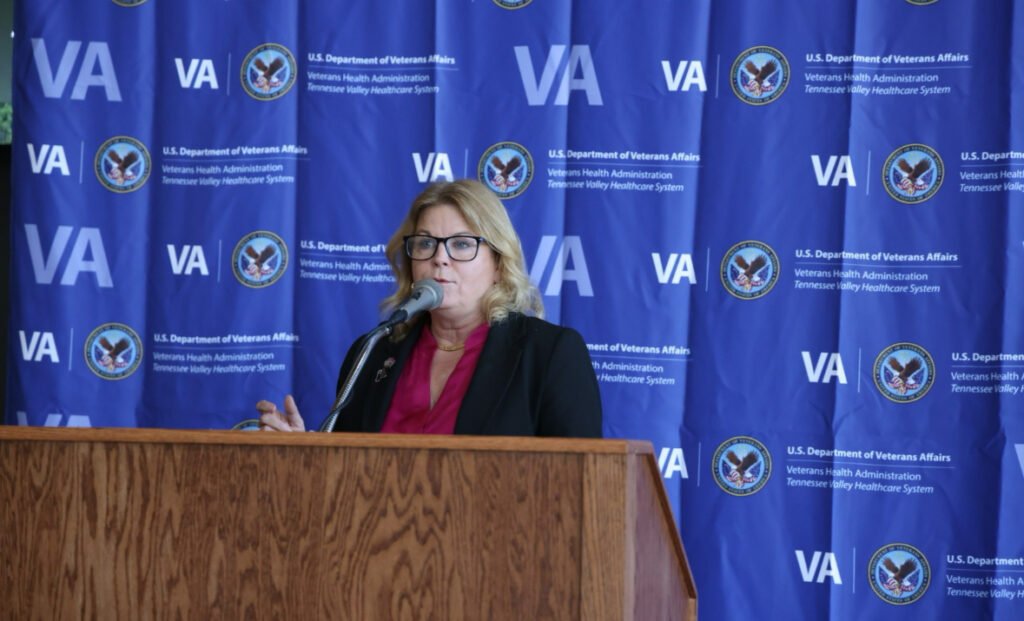
That decision, born from necessity in a combat zone, now guides her leadership at VA Tennessee Valley Healthcare System (TVHS), where she serves as Interim Deputy Executive Director and Associate Director for Patient Care Services overseeing nursing operations across two level 1A medical centers.
Afghanistan 2010: When Young Nurses Face Combat Medicine
Dr. Brozyna’s deployment to Afghanistan began with concern. As the only reservist commanding all active-duty personnel, she led a team of very young nurses, some with only eighteen months of nursing experience, caring for severely wounded patients.
“At first, I thought, ‘Uh oh,'” she recalls. “I had a lot of very young nurses who had not been a nurse longer than a year and a half. Some had only been a nurse for a year. And we had very traumatic, injured, wounded patients.”
But something remarkable happened. These young nurses proved phenomenal. Highly skilled. They didn’t miss a beat.
“I was so proud of the care that we gave,” Dr. Brozyna says. “The entire time I was there, we had one patient pass away, and his wounds were unsurvivable. For the other patients, we literally moved heaven and earth, got them to Germany, and flew their families to Germany to be with them.”
That experience taught her that with the right leadership and support, even the newest professionals can deliver excellence under extreme conditions. But it also taught her something more profound about what veterans need.
“People were going home with life-changing wounds, whether you could see them or not,” she reflects. “The impact of war is significant, both on the family members waiting at home and those service members serving in a volunteer way, but also very impactful to the nurses and medical teams caring for them.”
She returned from Afghanistan with a new mission: get into VA leadership positions where she could deliberately grow the next generation of health care leaders.
“I think the Department of Veterans Affairs is best positioned to take care of the unique needs of our veterans,” Dr. Brozyna says with conviction. “And it makes me very proud to continue my service after retiring from the Air Force with the Department of Veterans Affairs.”
The Epiphany: When Mentorship Fills the Cup
The most transformative lesson from Afghanistan came not from the medical care itself, but from conversations with those young nurses during quiet moments.
In the military, promotions follow strict timelines. Windows open and close. Dr. Brozyna found herself mentoring and coaching young officers, encouraging enlisted staff with potential to become officers, pushing nurses to pursue advanced degrees.
“Having those conversations, I saw it change people,” she reflects. “Spending that time mentoring and coaching really filled my cup, and I felt that was how I was going to make a bigger impact on our health care system.”
When she returned to Maine and told her husband she wanted to pursue nursing executive leadership, his first question was practical: “How much did we pay for that degree?”
She had just completed her nurse practitioner degree. But Dr. Brozyna had experienced an epiphany: she could change more lives by developing leaders than by treating patients one at a time.
She started as an associate nurse executive with Central Western Massachusetts VA. Within eighteen months, she moved into the nurse executive role, often referred to as associate director of patient care services. At VA Tennessee Valley Healthcare System, she created a nurse manager academy to give new managers the toolkit for success.
Does she miss direct patient care? “Yes, I do,” she admits. “But my cup gets filled every day when I come to work because I’m able to continue serving this way, and I have huge respect for the team I work with every day.”
The Legion of Merit: Sometimes the Old Way Isn’t the Right Way
Dr. Brozyna received the Legion of Merit for her service in Afghanistan, and the story behind it reveals her approach to innovation.
When she arrived, her team followed standard practice for preparing patients for aeromedical evacuation: wait for the patient list, then scramble for six hours before the flight getting everything ready. It was chaos, stressful and prone to safety events.
Dr. Brozyna watched this the first time and thought, “This is crazy.”
She asked her team: “Why are we doing it this way? In practice, we start discharge planning on admission. Why wouldn’t we do that here?”
Every patient would leave eventually, either returning to the front lines or going to Germany for further care. So, her team started planning for patient movement from admission, assembling supplies in advance, coordinating with receiving facilities early, checking equipment days before flights instead of hours.
Safety events decreased. Stress levels plummeted. Eventually, her team was playing cards before flights while other units frantically scrambled.
When Air Force observers arrived, they noticed immediately. “What are you guys doing? This is very different than we’ve seen.”
That willingness to question “the way we’ve always done it” became part of the reason for her Legion of Merit. More importantly, it became core to her leadership philosophy.
“Doing it the way we’ve always done it is sometimes not the right way,” she states. “Before I make a decision, I want to know what the current practice is, but what does the evidence show we should be doing? And then go to the experts and trust your people.”
Leading Through Adversity: Transparency in Tough Times
As Interim Deputy Executive Director overseeing operations for two level 1A medical centers and 21 outpatient clinics serving 146,000-plus veterans across three states, Dr. Brozyna faces considerable challenges. The 2025 hiring freeze hit hard. The Voluntary Early Retirement Authority program led to staff departures. Positions remained unfilled. Anxiety rippled through the organization.
“We’ve had to be creative with some positions and moving positions around,” Dr. Brozyna explains. “But we need to continue our mission, which is caring for our veterans.”
Leadership focuses on interdisciplinary approaches, transparency, and communication. Executive Director Daniel Dücker has conducted over 100 outreach programs. Dr. Brozyna has attended four since becoming interim deputy, driving to remote areas to talk with veterans.
But outreach is only half the equation. The remaining portion involves supporting and looking after employees.
“We’ve been very deliberate with staff engagement and ensuring staff have an outlet,” Dr. Brozyna says. With the hiring freeze and potential government shutdowns, leadership holds monthly town halls and weekly executive talks.
“We’re trying to be as transparent as possible and provide information to our team. We’re also taking time to celebrate the wins we have, because that’s important for our team’s resilience. Even when it’s tough and we come together as a team, we can get through anything.”
The biggest operational challenge? Communication across such a large, geographically diverse system.
“Communication is a huge challenge when you’re this large,” Dr. Brozyna acknowledges. “We’ve leveraged a lot of different avenues through town halls, video messages with executives, and the Ask the Director platform.”
She also worries about staff having time to breathe. TVHS recently held a Halloween event to celebrate and thank employees, giving people permission to have fun and remember why they love their work.
“I come to work without anxiety,” Dr. Brozyna reflects. “I know we have the right team in the right places, and we have subject matter experts in pretty much anything you can think of. People are willing to step up and help wherever the need is.”
Measuring What Matters: Three Game-Changing Initiatives
When discussing metrics, Dr. Brozyna focuses first on veteran experience: 93% of veterans trust and would recommend TVHS. But she digs deeper into specific nursing improvements.
Falls: Virtual Telesitters
Falls are a challenge across all health care systems. Last year, TVHS implemented a virtual telesitter program, allowing one staff member to monitor multiple patients through video feeds instead of requiring one-on-one sitters.
Within a year, TVHS decreased falls by 30%.
“We also decreased how many folks we were having to pay to sit one-on-one with patients, which saved money but also saved staffing frustration,” Dr. Brozyna explains.
Catheter Infections: Empowering Nurses
Catheter-associated urinary tract infections can be serious, but they’re largely preventable. Dr. Brozyna’s team did a deep dive into evidence and developed a nursing protocol that changed practice.
“We don’t put in foleys unless we absolutely need to. We talk about it with the interdisciplinary team. But as soon as the patient exhibits signs we could pull it, we don’t have to wait to get an order. We’re pulling them faster.”
The results? “Our catheter infection rates are almost at zero. We’ve done that in the last six months, and nurses are doing a great job.”
System-Level Solutions
When TVHS began facing challenges with medication distribution, Dr. Brozyna decided to take a deeper look at the systems behind the issue. “We had challenges because multiple things within our system weren’t set up for nurses to be successful,” she explains. Working closely with nursing, informatics, and pharmacy, she and her team identified the root causes and corrected system issues that had been standing in the way of efficiency and safety.
Her time in private practice also shaped how she approaches organizational problem-solving. When addressing sterile processing nonconformities, she didn’t stop at identifying errors—she calculated the true cost of each one, including labor, water, materials, and staff time. “Having those conversations with the ‘why is it important,’ I look at things from a financial perspective much deeper than I used to,” she reflects.
The Leadership Legacy: One Conversation at a Time
When asked about her leadership legacy, Dr. Brozyna’s answer comes from the heart.
“I want my legacy to be that folks realize the importance of mentoring and coaching and taking time to develop people one-on-one,” she says. “You can’t replace the one-on-one time and mentoring that can change someone’s life.”
She wants people to remember that Bridget cared enough to spend time with them, to ensure TVHS has a sustained ability to grow the next generation of leaders.
“I would hope my legacy would be that Bridget cared enough to have those conversations and lead others to become the best version of what they see for themselves. Or maybe have conversations where people didn’t see it in themselves, and then changed their career trajectory because someone cared enough to sit down and say, ‘Have you ever thought about this?'”
She’s seen the alternative in the military: people coming up for promotion who aren’t ready because no one mentored them.
“It’s particularly important with nurses at the bedside,” Dr. Brozyna explains. “Do you want to be at the bedside for 40 years? And if not, what are you doing now to prepare yourself for that next opportunity?”
She pauses, then adds with a smile, “And the fact that I get to take care of veterans is just icing on the cake.”
Balance and Gratitude: The “I Wish I Would Have” Pact
Dr. Brozyna has been married for 37 years to a man she met in Air Force ROTC. Their marriage is founded in faith, and when they married, their priest gave them advice that would shape their lives.
“Our priest said, ‘You need to ask each other, what are your deal breakers?'” Dr. Brozyna recalls.
They identified one commitment above the rest: neither wanted to look back and say, “I wish I would have.”
That pact led to bold decisions. Her husband lived in Shanghai for eighteen months while their kids were teenagers and Dr. Brozyna was still in the reserves. They prioritized opportunities even when it meant sacrifice.
She shares an example of prioritizing family. Her daughter was at Boston College. Dr. Brozyna was running the VA clinic in Maine with important meetings scheduled. But when she called her daughter, she could tell something was wrong.
So she drove four and a half hours to Boston.
“I called in and said, ‘I need to be there,'” Dr. Brozyna recalls. “At the end of the day, the thing that matters most is your family unit.”
Her husband is her best friend. They take family vacations. They still do date nights. They renew their vows every 10 years.
“We want to ensure we choose each other every day, because marriage is not easy, but it’s a blessing,” she says. “I tell my kids, ‘Marry a person who will help you become the best version of yourself.’ I was lucky enough to do that.”
Veterans Day: Thanking the Families Too
When asked what Veterans Day means to her, Dr. Brozyna’s response encompasses everything she believes about service.
“Veterans Day means taking time to reflect on my service, to thank those who have served. But it’s not lost on me that we’re an all-volunteer force, and the United States has freedoms that others only imagine having.”
She’s seen countries where women have no rights, where children suffer, where basic freedoms don’t exist.
“I’m honored to be able to live in the United States. I think it’s kind of like you’ve got the golden ticket because you were born an American citizen. Just pausing to thank those who have served before me and will serve after me to maintain the freedoms we have. Because if we start taking that for granted, we’re in a lot of trouble.”
She always thinks about families.
“When I look at a veteran, I’ll always look to the right or left, and if they have somebody with them, I’ll thank them for their service too. The six months I was gone in Afghanistan really changed my husband and changed my kids. The sacrifice families make is huge. On Veterans Day, it’s time to reflect and thank those who have served, but those family members as well.”
A Message to Women Veterans
Before concluding, Dr. Brozyna wants to highlight the changing face of veteran health care.
“One of the things we’re seeing is a change in women’s roles as veterans. It’s our fastest growing population. At Tennessee Valley, we have 16,000 female veterans enrolled, and that number will continue to grow.”
She pauses for emphasis.
“This is not my father’s VA anymore. It used to be that if I saw one female veteran in a month, it was like, ‘Oh good, I get to see a female.’ But now it’s not an exception anymore.”
When Dr. Brozyna first served, women couldn’t do every job in the military. Now they can do any job if they qualify.
The message to female veterans is clear: “Stand up and be heard. Apply for your benefits. Apply for VA care. Come where we can take the best care of you, because we are the experts in what females face during active duty. We’re a five-star facility because our outcomes are better. The VA is here for you.”
The Dream Job
If Dr. Brozyna could have dreamed up her dream job, this would have been it.
When she interviewed at VA Tennessee Valley Healthcare System and met Dr. John Nadeau and Executive Director Dücker, both retired colonels, she knew immediately: “That is where I want to be.”
“I have not looked back. I’m thrilled to be here. I think our team is phenomenal.”
She means it when she says she gets to go to work, not that she has to.
For the 146,000-plus veterans TVHS serves, having a leader who understands sacrifice, who believes mentorship changes lives, and who steps into the gap when needed means everything.
“If I could have dreamed up my dream job, this would have been it,” Dr. Bridget Brozyna says simply.
Resources for Veterans & Healthcare Professionals
VA Healthcare & Patient Care Services
- VA Health Care Enrollment: How To Apply For VA Health Care | Veterans Affairs
- My HealtheVet: Home – My HealtheVet – My HealtheVet (Manage VA healthcare, prescriptions, and appointments)
- Veterans Crisis Line: Dial 988, then press 1 | Text 838255 | Veterans Crisis Line
Mental Health & Wellness Support
- Vet Centers: Find VA Locations | Veterans Affairs (Community-based counseling and readjustment support)
- National Center for PTSD: PTSD: National Center for PTSD Home
- Give an Hour: Find Mental Health Services, Resources, and Education – Give an Hour (Free mental health services for veterans and families)
Nursing Leadership & Professional Development
- American Nurses Association: American Nurses Enterprise | American Nurses Association
- VHA Office of Nursing Services: Office of Nursing Services (ONS) Home
VA Careers & Employment
- VA Careers: Careers at VA – U.S. Department of Veterans Affairs
- Tennessee Valley Healthcare System Careers: Work With Us | VA Tennessee Valley Health Care | Veterans Affairs
Support for Military Families
- Military OneSource: Support for Military Personnel & Families | Military OneSource | 800-342-9647
Connect with Tennessee Valley Healthcare System
- Tennessee Valley Healthcare System: VA Tennessee Valley Health Care | Veterans Affairs
- Patient Advocates available at all TVHS facilities
About Dr. Bridget Brozyna
Dr. Bridget Brozyna, Colonel, USAF (Ret.) served 30 years in the Air Force, retiring as a Colonel. She currently serves as Interim Deputy Executive Director and Associate Director for Patient Care Services at VA Tennessee Valley Healthcare System, where she oversees nursing operations across two level 1A medical centers serving more than 146,000 veterans across three states.
Veteran Excellence Magazine celebrates outstanding leadership in veteran healthcare and services.