
By Camille D. Ford | Veterans Day Special Feature | November 2025
Summary
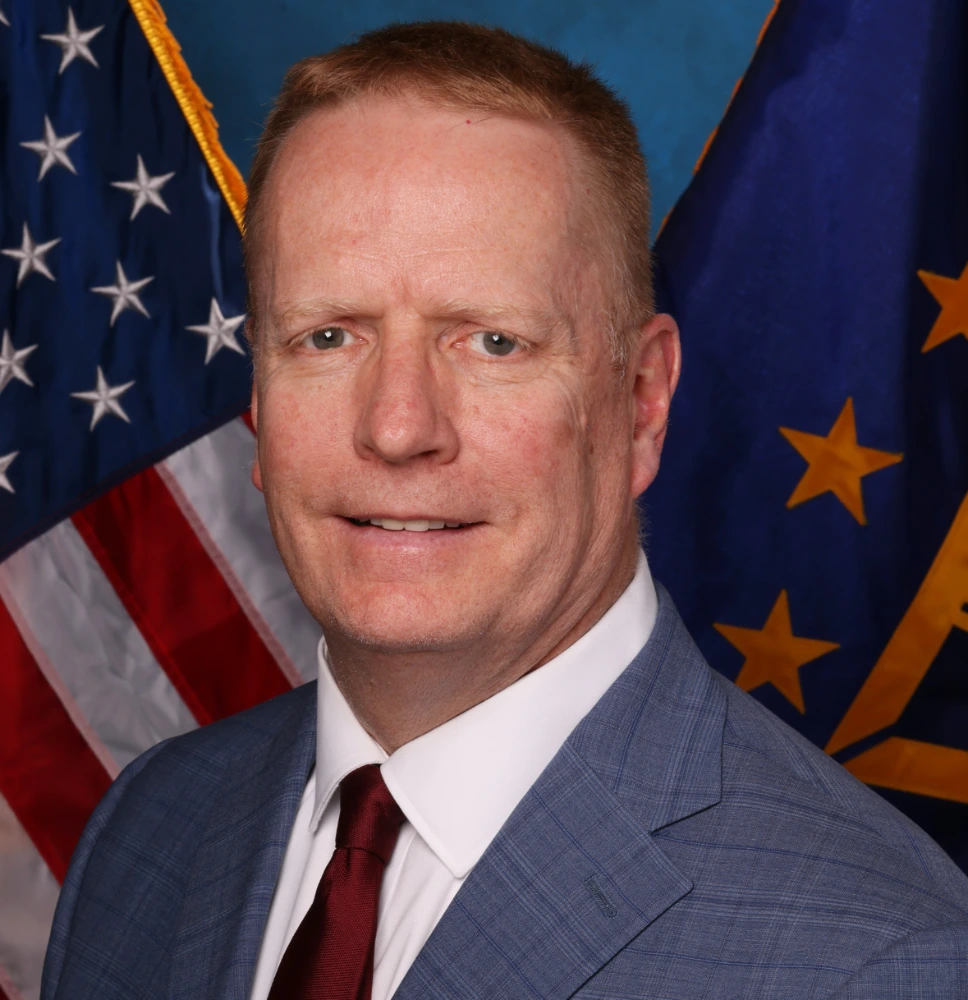
After 34 years in uniform and a decade leading VA health care, Daniel L. Dücker knows that excellence isn’t about avoiding problems—it’s about recognizing opportunities. As Executive Director of VA Tennessee Valley Healthcare System, he’s transforming one of the nation’s largest VA medical centers by putting staff first, veterans always, and proving that the best leadership happens shoulder to shoulder with the people doing the work.
Daniel L. Dücker doesn’t talk about problems. He talks about opportunities. It’s not just semantics; it’s a philosophy that shapes how he leads VA Tennessee Valley Healthcare System, one of the largest and fastest-growing VA health care systems in the country. With 5,100 employees, two level 1A medical centers, 21 outpatient clinics, and a $1.8 billion budget serving more than 146,000 veterans across three states, Dücker leads with a principle learned decades ago in uniform: selflessness.
The Foundation Built on Sacrifice
If you ask Dücker what single lesson from his military service shapes his executive leadership approach, he answers in one word: selflessness. “Serving as a young, enlisted guy and then eventually becoming commissioned and serving for almost 34 years, it’s that you have to be willing to sacrifice for others,” he explains. “In the army, we talk about your battle buddy, who’s in the foxhole next to you. You have to be willing to die for them. And that’s a big commitment when you sign up for it.” Being in a combat zone reinforced that commitment. The selflessness he learned in uniform rings true today in almost everything VA Tennessee Valley Healthcare System does. It’s about putting others before yourself, always.
Dücker’s path to VA leadership wasn’t traditional. As a reservist rather than full-time active duty, he served post-9/11 on active duty for about nine years throughout Europe, Afghanistan, and Iraq. What brought him to VA was a mentor’s insight. While serving as a clinic commander in Schierstein, Germany, he worked with George Sherman, a Department of Army civilian. Their clinic’s performance improved from among the lowest five to among the highest five. “George said, ‘You’re pretty good at this. You should probably think about doing that in the VA, this thing that you’re doing: leading and developing subordinate leaders and providing more care and quality care for our service members,'” Dücker recalls.
But there was something deeper that sealed his commitment. During his time as clinic commander in Germany from 2004 to 2006, 62 service members died in combat. Others came back with injuries. Eight family members died in the rear. One of his wife’s best friends lost her husband as he was making his way back for the delivery of one of their children. “It made an impact on my wife and I,” Dücker says. “I’ll say it changed us forever, this idea of serving those who have served. It became real. It’s not about reading it in the newspaper or watching it on TV. We were in the middle of it, living it.” That commitment shaped his decision to pursue VA leadership. “If I can be here to make a difference to help veterans, that’s what I want to do.”
Learning at Every Stop
Dücker’s VA journey began in Tampa in 2009 as executive assistant to the chief of staff, then as group practice manager for clinical operations. “What I call mastery. I had mastery over how to run clinical operations in the VA through that experience, partnering with clinical leaders,” he explains. “I understood the administrative side and how we get to where we need to go, and they understood the technical stuff. They were physicians. So, that partnership in developing partnerships with clinical leaders is really important.”
He first led all administrative services at the Togus VA Medical Center in Maine. “Over that next 18 months, I got mastery over running the operation side, the administrative side,” he says. The experience in the Department of Defense had been valuable, but the VA side was different, and Maine gave him the chance to understand those differences deeply.
Then came Fayetteville, North Carolina, as the executive director. This was his first time leading a VA medical center, and it was a turnaround project. The facility did not demonstrate strong performance in several areas. “I got to put this acumen for administrative tasks with clinical operations together for the first time. And that’s a dangerous tool,” he says with a smile. “Because now I understand both sides of it from experience and leading it, being responsible for it. I think that’s where I honed my skills in being a change agent in terms of how you get people to buy into what you’re trying to do.”
The key, he learned, was setting a clear vision and then establishing clear expectations of what everybody’s role is in contributing to the mission and goals. Within a little over two and a half years, Fayetteville started getting wins as a four-star facility, serving more veterans, generating positive media stories, and building strong partnerships with the Department of Defense. One thing Dücker particularly valued about Fayetteville was its proximity to Womack Army Medical Center at Fort Bragg, North Carolina. “Easy for me because I’ve been an Army guy my whole career, and so now I’m collaborating with Army officers again,” he says. That experience with DOD partnerships would prove invaluable at his next assignment.
In April 2022, Dücker moved to VA Tennessee Valley Healthcare System. The draw was multifaceted: strong affiliations with Vanderbilt University and Meharry Medical College, research opportunities, and proximity to Fort Campbell for DOD partnerships. “It had not been performing particularly well, and I thought the opportunity for me to come in and lead this organization, not knowing anybody here when I got here, and never having been in Tennessee, was very exciting,” Dücker says. Over three years, VA Tennessee Valley Healthcare System has become a five-star facility making waves with demonstrable improvements in veteran care.
Veterans Day and the Legacy of Service
For Dücker, Veterans Day connects to childhood memories of his father, who served in Korea, and watching Veterans Day parades in his small Midwest town. “I remember the color guards from the VFW, and I had great respect for those who had served,” he says. He never planned on military service until he needed to pay for college. “I was one of 10 kids. The only way I was really going to get to go to college was through the military. And then I was going to be done.” Thirty-four years later, after combat tours in Afghanistan, Iraq, and the Philippines, he separated and retired. “I really enjoyed serving others and leading others, and that all came from that foundation that I saw as a young kid growing up and looking up to those folks who had served before me.”
Putting Staff First to Serve Veterans Best
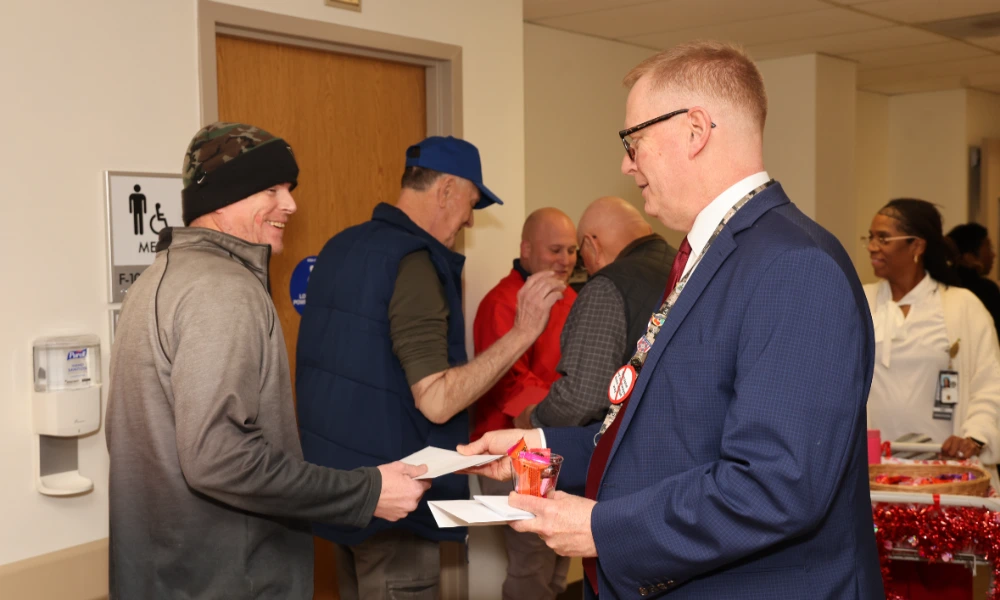
When Dücker talks about veteran-centered care, he explains something counterintuitive: “We put veterans first by putting our staff first, actually. We need to make sure our staff have the training they need, the resources they need, the space, the collaboration they need, the communication, all of the things they need to be successful. We have to put our staff first. And by doing that, we know that our staff will do their best to serve the veteran.”
How does he do that? Through what he calls “rounding like crazy.” The executive leadership team, typically seven members including the deputy executive director, Chief of Staff Dr. John Nadeau, associate director for patient care (nursing executive), associate directors for resource and operations, and the assistant director, walk around constantly, visiting all 20-plus sites of care regularly and talking to staff, assessing barriers, and finding ways to help. But it’s not just executive leadership. VA TVHS service chiefs and supervisors are also rounding the facilities, so leaders at every level who are not part of the executive team also engage with frontline staff. “That has really translated into staff that’s happy they chose Tennessee Valley,” Dücker says. “You know that old cliché: people don’t care how much you know until they know how much you care. At Tennessee Valley, I believe our staff would tell you that they know that we as leaders care.”
VA Tennessee Valley Healthcare System has a platform called “Ask the Director” where any staff member can post a message directly to Dücker. “I get to read it. I want to read it because I want to know what their questions are so I can resolve them,” he says. “I tell them honestly, most of the time I don’t know the answer to the questions, but I know who does, and I will get it and make sure that you’re aware of the answer.”
Connecting with Veterans Where They Are
Before COVID, town halls were commonplace. But when social distancing and quarantining became the new norm, VA Tennessee Valley Healthcare System adapted and began hosting virtual town halls to keep veterans informed. But in 2023, VA Tennessee Valley Healthcare System made a commitment to get out into veteran communities, partnering with American Legions, VFWs, and state and local officials. “It’s that idea of being available, being vulnerable, and taking on the questions that nobody wants to ask,” Dücker explains. Something remarkable happens at these events: veterans leave and bring back their buddies because they find the information so valuable.
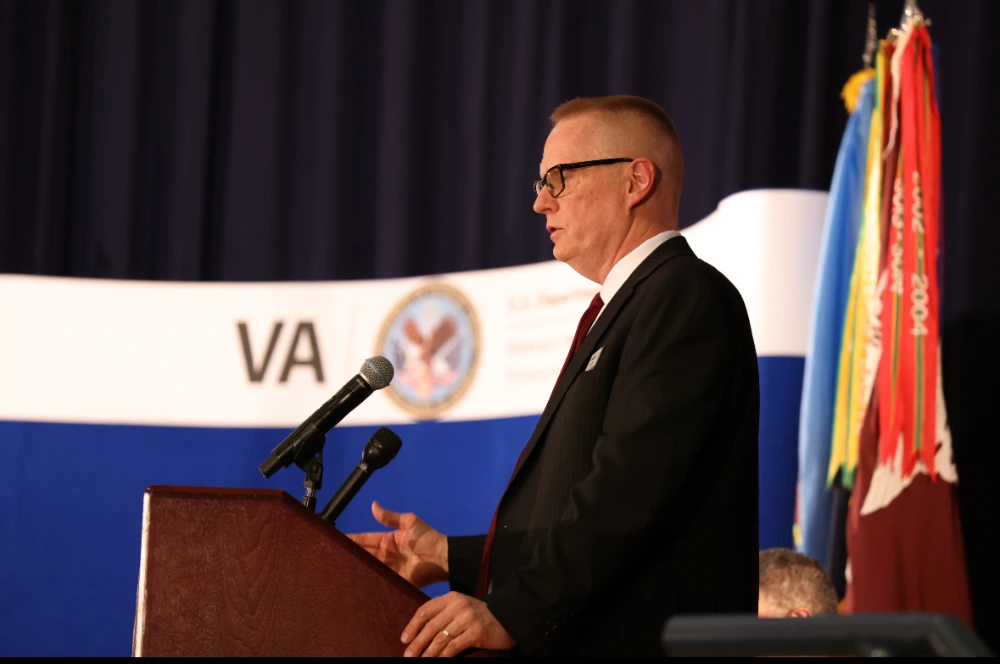
Through these outreach efforts, VA Tennessee Valley Healthcare System has enrolled more veterans in care because people didn’t know what they were eligible for. Some veterans are 15 or 20 years older than Dücker, have been eligible for decades, and never realized it. “And now they’re coming to us to ask questions. It’s amazing when you see it happen, and they’re so grateful,” he says. Dücker is emphatic: “Our care is excellent. The challenge is linking eligible individuals to appropriate care. That’s what we’re trying to make sure we’re doing.”
Fort Campbell: A Model Partnership
One of Dücker’s proudest achievements is the Fort Campbell VA Clinic partnership with Blanchfield Army Community Hospital (BACH), the only VA-DOD clinic in Kentucky. This partnership was personal for Dücker, and it became a priority from day one. “We didn’t have a DOD partner in the network. I might not have come to Tennessee Valley,” he admits. “That was really important to me because of my military background and the opportunity for partnership.”
Academic affiliates were important. Research was important. But the military community aspect was crucial, especially given that Fort Campbell is one of the fastest-growing military communities in terms of separating service members. About a third of people who separate from the military at Fort Campbell stay in Montgomery County. “The opportunity to serve them is awesome,” Dücker says. “And these are not people just retiring from the force. Some of them are not retiring. They’re still entering the workforce and all that kind of stuff.”
The week after arriving at VA Tennessee Valley Healthcare System in 2022, Dücker drove to Fort Campbell to meet with Colonel Vince Myers, the commander of Blanchfield Army Community Hospital. “I said, ‘Listen, we need to do this. I’ve had some success at Fort Bragg doing it with Womack Army Medical Center when I was in Fayetteville, and we need to get that started here,'” Dücker recalls. Myers bought into the vision: VA clinics staffed by VA personnel inside the Army hospital, seeing veterans where many work on post.
“We have three primary care teams inside of the hospital seeing veterans,” Dücker explains. “It’s very convenient for them to be seen, and they go right back to work. Those clinics filled up right away.” Veterans working at Fort Campbell can get VA care during the workday without driving off post, making it far more likely they’ll keep appointments.
A dental clinic was established through the partnership. Many Fort Campbell service members are 100% disabled when they separate because of their combat roles. “These are folks that are in the fight, and they tend to be at a higher rate of 100% disabled. Well, if you’re 100% disabled, you get dental,” Dücker explains. “The VA will never have enough dental resources to take care of all of our veterans, but in this partnership with DOD, we were able to open a VA dental clinic on post.” That clinic will continue to expand over the next few years as the partnership strengthens.
Another innovative aspect involves maternity care. BACH delivers many babies for young military families. When service members separate and become veterans, VA Tennessee Valley Healthcare System partners with BACH so female veterans can continue delivering their babies at the Army hospital. “It’s been enormously successful. That relationship, the continuity of care, and just a really good experience for those female veterans,” Dücker says. They can receive care at the same trusted location even after transitioning from military to veteran status.
The partnership continues to develop. BACH recently got a new commander, and Dücker met with him within the first couple weeks of his arrival to continue building the relationship. It’s a model that Dücker believes represents the future of integrated veteran care, breaking down barriers between DOD and VA, ensuring continuity, and meeting veterans where they are.
Fostering Innovation: Shark Tank and Lean Six Sigma
VA Tennessee Valley’s approach to innovation starts on day one with new employee orientation. The executive leadership team challenges new hires to be the best version of themselves when they come to work. “Can you imagine a place to work where everyone comes to work as the best version of themselves? That’d be pretty cool,” Dücker says. “So, I ask them to make commitments to be the best version of themselves when they come to work.” It’s about setting expectations and creating conditions for success, because when staff members are successful, veterans get the best possible care.
But beyond the messaging, VA Tennessee Valley has created concrete mechanisms for innovation. Two years ago, the organization introduced Shark Tank competitions that are similar to the television show, where participants present ideas to a panel of judges. “We think that frontline staff probably have the best ideas about how we can improve our work,” Dücker explains. The competition format is simple: staff members pitch their improvement ideas, and the “sharks” are the executive leadership team members who must sponsor the winning projects.
“We never have a shortage of applications to be a part of Shark Tank, and that has led to real innovation in workspaces,” Dücker says. “I’m sitting in my chair. I don’t have any understanding of how to improve the lab processes. But guess who does? The people working in the lab. So, we give them an opportunity to bring those ideas forward.” Executive sponsorship plays an important role. When the director or chief of staff or nurse executive sponsors a project, barriers get moved out of the way. Staff see their ideas come to life, and that success breeds more participation.
VA Tennessee Valley Healthcare System also has a robust Lean Six Sigma program focused on process improvement training. It’s called Systems Redesign. Staff can become certified as yellow belts, green belts, and black belts. It’s all about efficiency and getting rid of waste. “We have 13 projects going through right now for black belt certification. I’ve never been in an organization where I’ve had so many black belts going through,” Dücker says. “As we set the conditions and the culture of process improvement, we had 13 people step up and say, ‘Hey, I’ve got an idea of how we can improve the overall processes.’ Which is truly important.”
The Metrics That Matter
VA Tennessee Valley Healthcare System surveys veterans extensively. Veteran trust sits at 93%, well above the national average. Perhaps most dramatic is the turnaround in VA Tennessee Valley’s overall hospital rating. VA Tennessee Valley Healthcare System went from the bottom 10 to the top 10 ranked facilities in the country within about a year to 18 months.
VA Tennessee Valley leveraged that data to make the case for more space at the national level, resulting in five facility expansions.
Another metric: nursing turnover. Typically, VA systems see 17% to 20% turnover. “Our turnover right now is less than 5% and has been for the last two years,” Dücker says. “That says the nurses like what’s going on, like they like what they’re doing, how they’re doing it, and they’re not leaving. In fact, they’re recruiting people to come to work at Tennessee Valley.”
Closing the Gap Between Perception and Reality
As a veteran leading care for fellow veterans, Dücker sees the gap between what veterans think VA is and what he knows it actually is. He has a term for the phenomenon: “barber shop glory.” “Have you ever heard of that?” he asks. “Soldiers, or sailors, airmen, marines, talk about things, and they think they’ve got it figured out when they actually don’t have it figured out. In VA, it’s waiting room lawyers. Veterans sit in the waiting room by themselves, and they think they’ve figured it out, but they haven’t really figured it out. They’re just talking amongst themselves.”
That’s why outreach matters so much: being available to veterans, working through rumors and misinformation. Hannah, who leads communications and outreach efforts, and her team have done “an amazing job using all the social media platforms to get truth and information out to our veterans,” Dücker says. In the event of a sudden closure due to a tornado or similar incident, updates are posted promptly. If veterans are willing to provide emails and phone numbers, VA Tennessee Valley Healthcare System sends them information directly. “It’s over-communicating truth to our veterans to make sure they know what’s really going on, so we can dispel the rumors that they’re hearing in the barracks or in the waiting room.”
There’s another challenge in the modern era: veteran podcasts. “We fight against all these veterans who have podcasts sometimes because they have a perspective that maybe doesn’t reflect truth,” Dücker says. “And so, we’re trying to not compete with them but try to get our information out, so people know it. I literally say this to Hannah: we’ve got to continue to over-communicate. If we think we’re doing enough, we’re probably not. We need to continue to do that a little bit more.”
VA Tennessee Valley Healthcare System also builds trust through Dücker’s direct interactions with state and federal partners, with the Army, and with local universities, positioning VA Tennessee Valley not just as a care provider but as an employer. When he talks with university partners, he highlights job and training opportunities. Veterans sometimes reach out to say their son or daughter is interested in working at VA. “Can you meet with them? Sure, let’s figure out how we can help guide them,” he says. Being present at veteran events and community organizations matters. “It’s being present. I think that’s really important: not checking a box but being present and available for folks.”
What Keeps Him Motivated
“I think we do it better than most. And I want to continue to lead from the front by providing the best possible care to our veterans,” Dücker says. “That includes making really good decisions about who we hire. We can’t just hire anybody that walks in. We’ve got to hire some of the best professionals, and success begets success.”
He and Dr. Rushing talk about this all the time. “We’re not just trying to be the best in Nashville or Murfreesboro or Tennessee. We’re trying to be the best in the country in what we do, and we won’t rest until we do that,” Dücker says. Getting the five-star rating was a blessing because it gave people feedback about how hard they’ve been working. “It shows that we’re really taking this thing seriously, trying to be among the best in the country.”
Legacy of Inclusive Leadership
After 34 years in uniform and now leading one of VA’s largest health care systems, Dücker wants his leadership legacy to be “sustainment of the success that I’ve talked about with you today. If we sustain that and make it better, we’ve met the expectation.”
He wishes more people understood the commitment to inclusive decision-making. “I make my best decisions when I’ve included people in that decision. I can make decisions. It’s not that hard to make a decision, but to make the right decision requires buy-in from others.”
VA Tennessee Valley Healthcare System includes the voice of staff and veterans in decisions. The executive leadership team takes a day each month to discuss challenges in isolation. “I will tell you, we may disagree in that room,” Dücker says. “But when we leave there, we’re one voice and we’re one mission.”
He gives an example: VA Tennessee Valley’s attire policy. There was none when Dücker arrived. “Now we have an attire policy. It took about 10 months to make it, and it’s good, and people respect it, and people understand it.” They also established employee associations at each campus last year. “That’s the voice of the customer. I’m not in the room. They’re having their own conversation, so we’re trying to empower people where we can.”
The Work That Matters
Near the end of our conversation, Dücker returns to something fundamental. “I’m passionate about what I’m doing. And I say to people: I get to do this. I don’t have to do this. I get to do this, and I love doing what I do. I love what I do. I love having an influence on our staff in a good way, and I love being able to influence doing more and better care for our veterans. So, I have the greatest job in the country. I feel like I do.”
He also returns to something deeply personal. “I said this to a couple of people: ‘Thank you for your service’ is an understatement. It truly is, to me. And it is truly an honor to serve you, because you made a decision that I never had to make.” It’s a reminder that this is about people: veterans who raised their right hand and made commitments that most Americans never have to make, and leaders like Dücker who understand what that sacrifice means because they lived it themselves.
VA Tennessee Valley Healthcare System trains staff to sit with veterans and capture their stories from enlistment through service. “We want our staff to connect with the mission of serving veterans who are among the 1%, the 1% who actually volunteered or got volunteered, got drafted, to serve,” Dücker explains. “And that’s a unique opportunity to serve in a way that even if you didn’t serve, you’re serving now those who have served.”
When discussing Post Traumatic Stress Disorder (PTSD) and substance abuse treatment, Dücker is candid about the challenges. “We haven’t figured it out yet. What is the antidote to PTSD and how to get people back on the recovery path. There’s so much substance abuse in our world right now.” VA Tennessee Valley Healthcare System has almost doubled the capacity of their substance abuse program in the last three years. “We’ve got to continue to figure out ways to identify it. Not all PTSD is diagnosed, and it manifests itself in different ways. And then continue to partner with research institutions like academic universities to figure out how we can better treat it.”
For Daniel L. Dücker, there’s still more work to do, more opportunities to pursue, more veterans to reach and serve. It’s about the selflessness he learned in uniform, the commitment he made in Germany when he saw the cost of service up close, and the opportunity he has every single day to lead from the front.
“It’s a village,” he says simply. And at VA Tennessee Valley Healthcare System, that village is 5,100 strong and growing, united by a mission that never ends and a leader who never forgets that excellence begins with putting others first.
Resources for Veterans & Healthcare Professionals
VA Healthcare & Patient Care Services
- VA Health Care Enrollment: How To Apply For VA Health Care | Veterans Affairs
- My HealtheVet: Home – My HealtheVet – My HealtheVet (Manage VA healthcare, prescriptions, and appointments)
- Veterans Crisis Line: Dial 988, then press 1 | Text 838255 | Veterans Crisis Line
Mental Health & Wellness Support
- Vet Centers: Find VA Locations | Veterans Affairs (Community-based counseling and readjustment support)
- National Center for PTSD: PTSD: National Center for PTSD Home
- Give an Hour: Find Mental Health Services, Resources, and Education – Give an Hour (Free mental health services for veterans and families)
VA Careers & Employment
- VA Careers: Careers at VA – U.S. Department of Veterans Affairs
- Tennessee Valley Healthcare System Careers: VA Tennessee Valley Health Care | Veterans Affairs
- VHA Office of Nursing Services: Office of Nursing Services (ONS) Home
Support for Military Families
- Military OneSource: Support for Military Personnel & Families | Military OneSource | 800-342-9647
Connect with Tennessee Valley Healthcare System
- Tennessee Valley Healthcare System: VA Tennessee Valley Health Care | Veterans Affairs
- VA Tennessee Valley CMS 5-Star Rating: https://www.va.gov/tennessee-valley-health-care/news-releases/va-tennessee-valley-healthcare-system-receives-top-scores-in-latest-cms-hospital-ratings
- Nashville VA Medical Center: 1310 24th Avenue South, Nashville, TN 37212
- Alvin C. York VA Medical Center (Murfreesboro): 3400 Lebanon Pike, Murfreesboro, TN 37129
- Fort Campbell VA Clinic (at Blanchfield Army Community Hospital): 650 Joel Drive, Fort Campbell, KY 42223
- Patient Advocates: Available at all TVHS facilities
VA-DoD Partnership
- Blanchfield Army Community Hospital (BACH): Blanchfield Army Community Hospital > Home
- Fort Campbell VA Clinic: Primary care, dental, and maternity care services for eligible veterans
About Daniel L. Dücker
Daniel L. Dücker retired as a Colonel after 34 years in the U.S. Army Reserve, including command positions in Afghanistan and throughout Europe. He has served in VA health care leadership since 2009, becoming Executive Director of VA Tennessee Valley Healthcare System in April 2022. Under his leadership, VA Tennessee Valley Healthcare System achieved five-star status from Centers for Medicare and Medicaid Services and maintains some of the highest veteran satisfaction scores in the country. There are only four hospitals in Tennessee that earned a five-star rating from CMS, with two of those being VA medical centers—VA Tennessee Valley and the James H. Quillen VAMC in Mountain Home, Tennessee.
Veteran Excellence Magazine celebrates outstanding leadership in veteran healthcare and services.