
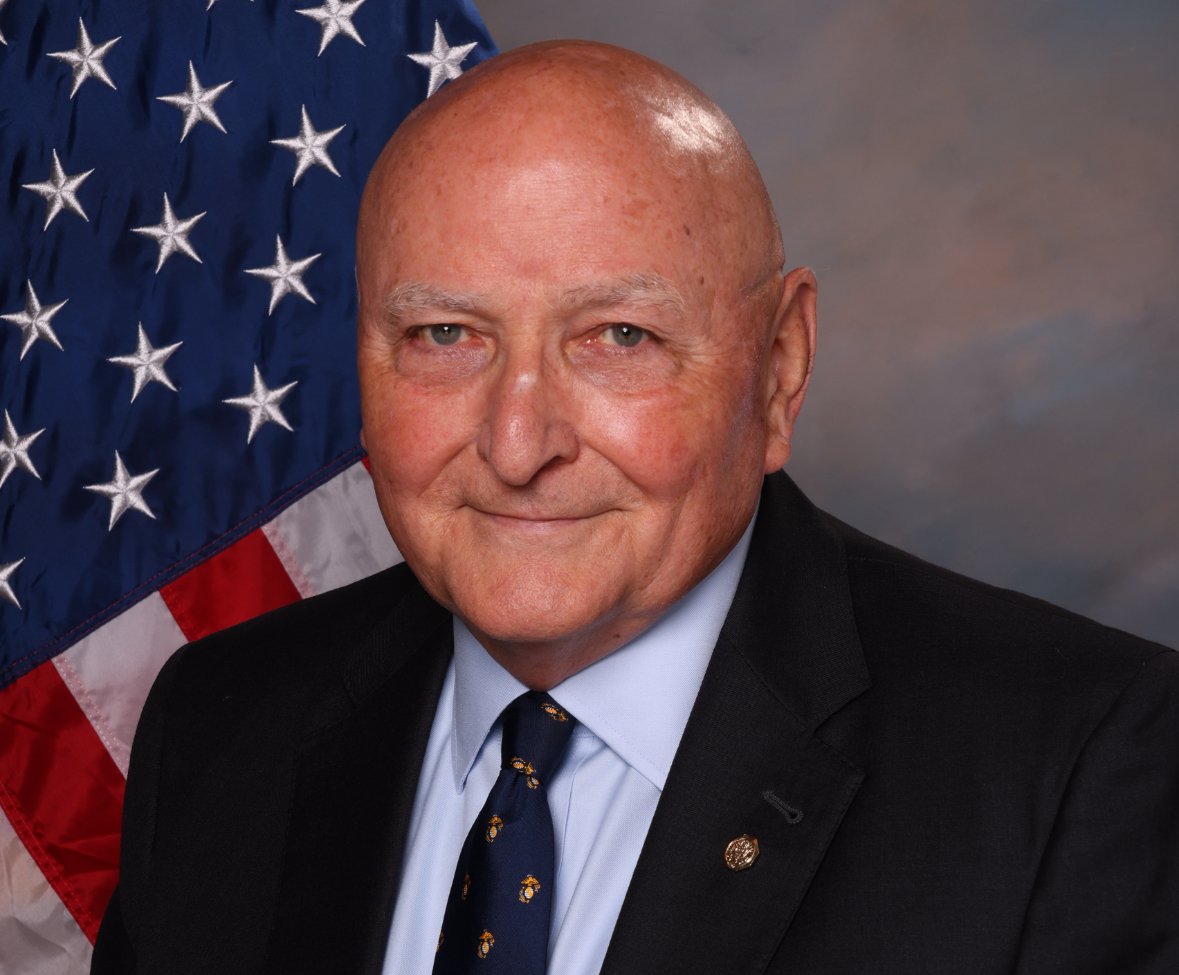
By Camille D. Ford | Veterans Day Special Feature | November 2025
Summary
Dr. John Nadeau, Chief of Staff at VA Tennessee Valley Healthcare System, brings four decades of clinical experience and Marine Corps values to transform VA health care. After deploying twice to Iraq as a Marine battalion surgeon, he joined TVHS full-time in 2008 on a mission to ensure returning veterans receive the care they earned. Under his leadership, TVHS evolved from a one-star to five-star facility with the highest primary care quality measures in the entire VA system, 93% patient satisfaction, and a veteran-centered care model that proves innovation beats bureaucracy every time.
Dr. John Nadeau remembers the airports. During his years as Force Surgeon for Marine Forces Reserve, he traveled constantly, often in uniform. Strangers would approach him, thanking him for his service with what he could tell was genuine sincerity. But something struck him every single time: they had absolutely no conception of what that service actually meant.
“Only about 1% of people join the military,” he reflects. “Most Americans really have no understanding of what these young men and women went through.” He would read poetry and short stories by veterans returning from war, pieces that made one thing clear: the disconnect between civilian life and combat experience was enormous, and veterans felt it acutely.
That realization became the foundation of everything Nadeau has built at VA Tennessee Valley Healthcare System over the past decade as Chief of Staff. Now, 79 years old and still coming to work because he chooses to, he’s on a mission to ensure every veteran who comes through TVHS doors receives not just competent care, but world-class care delivered by people who understand where veterans are in space and time.
From Canada to the Marine Corps
Born in Canada in 1946 just as World War II ended, Nadeau grew up observing what Canadians call Remembrance Day every November 11. The tradition of honoring those who fought in the First and Second World Wars shaped his understanding of service and sacrifice long before he ever put on a uniform himself. He attended medical school, began practicing cardiology in the mid-1980s, and spent a couple of years with the Naval Reserve before making a decision that would define the rest of his career: he transferred to the Marine Corps Reserve as a battalion surgeon.
“One of the highlights of my life was the opportunity I had to spend all those years with the Marine Corps,” Nadeau says. “This is an amazing organization.” For many years, he served as surgeon for a Marine Reserve Infantry Battalion, deploying with them to Iraq when the war came along, then redeploying again in 2007 and 2008. When asked why he chose to deploy, his answer is immediate and unequivocal. “If we, as a country, are sending young men into harm’s way, we have a responsibility to send them the best care possible. I thought that was important and worthwhile doing.”
After returning from war in 2008, Nadeau was assigned as Force Surgeon for the entire Marine Forces Reserve Organization, responsible for health care delivered to approximately 35,000 Marines. The job had three critical components: ensuring young Marines deployed healthy and ready, making sure they had appropriate medical care when they stepped off into theater, and most importantly, ensuring VA was there for them when they returned as veterans to deal with whatever issues they brought home.
During those three years as Force Surgeon, Nadeau discovered something troubling. Some VAs were outstanding. Others were not quite as outstanding. He had worked at VA in a part-time role as a cardiologist before the war, but that experience watching veterans struggle to get the care they had earned and were entitled to change everything. “I thought we could do better,” he says simply. “So, I came to the VA full-time.”
The One-Star to Five-Star Transformation
Nadeau continued as a cardiologist when he joined TVHS full-time, then became Deputy Chief of Medicine before taking on the role of Chief of Staff ten years ago. He arrived with a clear vision of what VA care can and should be. “The foundational requirement is to provide world-class primary care and mental health to every veteran that comes to us for care,” he explains. “That is job one. Yes, we do all kinds of other things, like bone marrow transplants and joint replacements, but our fundamental responsibility is to be sure that every veteran has access to a primary care team that is world-class, where the veteran has a voice in their care and develops a partnership with the care team so they can remain healthy.”
For ten years, Nadeau has been on a mission at VA Tennessee Valley Healthcare System to make that vision reality. The progress has been remarkable. TVHS started as a one-star facility a decade ago. Today, it’s a five-star facility. The primary care operation at VA Tennessee Valley is arguably the best operation in the entire VA system, ranking No. 1 in quality measures. But Nadeau is quick to point out that quality measures are only part of the equation. “We are on this journey to create a medical home where a veteran is a partner in the conversation relative to remaining healthy and well,” he says.
The transformation happened despite significant resource constraints. Over the last two years, TVHS finished without hiring a single new full-time equivalent employee. People retired, quit, were removed, and new people were hired, but the total number of employees on board today is actually less than two years ago. Yet productivity increased by 4% in the first year and 6% this year. Veteran growth of new veterans entering the system increased in the range of 2% both years. Veterans continue coming to TVHS, and the facility accomplishes more with less every single year.
“I think this approach to leadership with a focus on what our mission is, and having the team convinced from the outset that getting the mission done is what we’re going to do, allows us to accomplish what we accomplish,” Nadeau reflects. “Coming to work here every day is something I do because I choose to. I’m 79 years old. I continue to do this because I think it’s so important. What we have done over the last ten years at Tennessee Valley is remarkable and makes it all worthwhile.”
Mission Above Resources: A Marine Corps Lesson
Nadeau frequently points out something to the clinicians he works with at VA, a lesson he learned during his time with the Marine Corps: the mission is everything. “Particularly in today’s world, whether or not we have the resources that we think we need to get that mission accomplished is not the question,” he explains. “The question is, given the resources we have, can we get it done with the resources we have, not with the resources we think we’d like to have.”
He contrasts his experience in the Naval Reserve, where they would spend three to five months planning something only to have it called off two days before execution because they didn’t have everybody needed, with the Marine Corps approach. “In the Marine Reserve, that would never happen. We got the mission accomplished with the resources available, not with the resources we wished we had.” That mindset transferred directly to his work at VA. “It’s amazing what you can get done with a group of people who are focused on getting the mission accomplished irrespective of whether or not we have all the resources we’d like to have.”
The results speak for themselves. TVHS productivity increases year-over-year every year. They operate in a real growth area of the country, and more veterans eligible for care choose TVHS every year because of the quality and timeliness of service. “We as a country have made a commitment to everybody that stepped forward to provide good health care to them going forward,” Nadeau states. “That’s a sacred duty that we have, and we should honor that promise we made to our veterans. I come to work every day to be sure that we are honoring that commitment.”
A Different Population, A Different Approach
Veteran health care has changed dramatically over the four decades Nadeau has been practicing. Forty years ago, VA dealt with a different population of veterans, many of them Vietnam veterans. “I think we as a country, in many cases, failed our Vietnam veterans in that era,” Nadeau admits. Veterans came back from Vietnam injured in many ways, frequently with PTSD. Forty years ago in his cardiology clinic, veterans came with all kinds of psychiatric illnesses, PTSD, depression, traumatic brain injury.
At that time, providers were still learning the impacts of PTSD and treatments to help those suffering.
Today’s veteran population is different. The Vietnam veteran population is dwindling, and there’s a new crop of younger veterans, many of whom went to war. Many have psychiatric challenges, depression, PTSD. They’re coming back from war in their 20s and 30s, and TVHS has an opportunity to engage with every one of these veterans early. “We want to introduce them to the concept that they’re responsible for being healthy, and we want them to be our partners in keeping them healthy going forward,” Nadeau explains. “We want to address their mental health issues as partners and work through them while at the same time making sure they don’t develop all the chronic diseases that many veterans in the past have developed because of smoking and drinking or whatever.”
This group of veterans, Nadeau believes, TVHS is poised to keep healthy and well, allowing them to live contributing lives in the workforce in partnership with VA. “It’s a different mission,” he says. “We want to keep them healthy and well and make sure that they’re contributing citizens because we help them deal with all of the issues they came home from the war with.” Issues that, in many cases, they weren’t expected to survive.
Reimagining Primary Care
Nadeau has thought a lot about what’s broken in primary care, not just at VA Tennessee Valley Healthcare System but across the entire American health care system. When he was growing up, being a primary care doctor meant spending time with patients, listening to their concerns, addressing what brought them to the clinic. Over the last 30 to 40 years in Western countries, primary care has devolved into something else entirely. Doctors spend their time making sure quality measures are met, boxes are checked, protocols are followed.
He paints a vivid picture of what this looks like in practice. A veteran and his wife come in for a primary care visit. He’s had abdominal pain for three or four weeks and wants to talk to his doctor about it. He meets the nurse for intake and mentions his abdominal pain. But before addressing that, the nurse has to check: Are your immunizations up to date? You’re due for your colonoscopy. We need to get all this bloodwork. We have to check if you feel safe at home, whether you’ve had any thoughts of suicide. The whole intake is taken up with quality measures, all of them important, but the nurse has a checklist to complete. The veteran doesn’t really get to talk about his abdominal pain.
Then he sees the doctor, who goes through everything again, wanting to talk about alcohol use and all the other problems related to quality measures. The whole visit is consumed with checklists. As the veteran leaves, he says to his wife, “He never got to talk about my abdominal pain.” Primary care has evolved to focus on things that are important, granted, but primary care doctors are so busy doing all of that, they never really have time to ask the veteran what’s on his or her mind when they come to the clinic.
TVHS is on a mission to change that. “We’re going to manage the quality measures using all of the tools in our toolbox, including AI, so that when the veteran gets to see the doctor, all of that other stuff will happen in the background,” Nadeau explains. “The very first question at the visit for the veteran will be, ‘What’s on your mind today?’ So, the veteran has a voice and the veteran gets to make sure that the provider is actually practicing medicine rather than just spending 30 to 45 minutes being sure the X-ray was done, or the colonoscopy was done or the suicide checklist was checked off.”
This initiative ties directly into the question of veteran choice. If TVHS can provide care where the veteran is at the center of the conversation, that’s what medical care can and should be. “That’s a complex undertaking, but it boils down to the veteran talking about what the veteran’s goals and aspirations are,” Nadeau says.
Teams, Not Individuals
Another innovation TVHS has pioneered is the concept of true interdisciplinary primary care teams. Many veterans come to their first visit and say, “I had to run 30 miles a week for the last ten years in the military, and my running days are over. Since I got out, I haven’t been doing any PT.” The TVHS Whole Health team sits down with the veteran, talks about what health and wellness mean, what the veteran’s role is in staying healthy and well, and provides whole health coaching on a longitudinal basis where the coach becomes part of the treatment team going forward.
Nowhere but at VA could a veteran come to a primary care visit and have available a whole health coach, a social worker on the team if needed, and a mental health provider accessible same day. If a veteran comes depressed or anxious and needs to see a mental health provider, they can see that provider the same day without referral, simply by being introduced to the mental health provider on the team. There’s also a Doctor of Pharmacy on many teams who are experts in managing common illnesses like diabetes, hypertension, and hyperlipidemia, providing expert care without an additional consult.
Physiotherapists are assigned to every primary care team. Musculoskeletal and pain disorders are a big problem for young veterans, so anything musculoskeletal or pain-related, right there at the visit same day, the veteran can talk to a physiotherapist as the first person they meet after the primary care team to discuss how to manage the problem. “Only at the VA do we have those kinds of multidisciplinary teams making up our primary care teams,” Nadeau emphasizes. “The veteran, depending on what their concerns are, gets one-stop shopping same day and has all their problems addressed without a whole bunch of red tape.”
Academic Partnerships and Telehealth
TVHS is attached to Vanderbilt University Medical Center by an overpass, so many TVHS doctors are also Vanderbilt doctors. Vanderbilt is a world-class medical center, and having their doctors serve as TVHS doctors as well makes VA better. TVHS is also a training platform for Vanderbilt house staff. The other academic partner is Meharry Medical College, a traditionally Black medical school. Meharry sends its students and residents to TVHS, and they rotate through the Nashville VA Medical Center campus. In some specialty areas, residents’ main training platform is at VA, so TVHS exposes those residents to excellent care on a daily basis.
“We take full advantage of the expertise we get from our partners, and veterans benefit greatly,” Nadeau notes. The concept goes back to General Omar Bradley, who was put in charge of VA after World War II. General Bradley successfully argued that veterans coming back from the war would receive better medical care if VA hospitals were built adjacent to academic medical centers. The Nashville VA was built on the Vanderbilt University campus adjacent to the medical center in the 1960s. “That idea that General Bradley had was a huge success, and we have reaped the benefits,” Nadeau says.
Growing Their Own
TVHS serves as a training platform for numerous clinicians, and Nadeau sees that as key to recruitment. “How better to get people to work for the VA than to have them come as students and see what we do? Many of those people who train with us choose the VA as their employer.”
Finding a primary care doctor in America is becoming increasingly difficult. In the Boston area today, the wait time for a primary care appointment is a year. Rather than accept that reality, TVHS has created its own solution. Over the last three years, the facility has run a residency training program for newly minted nurse practitioners, offering them a one-year residency in primary care, mental health, and geriatrics.
“We want them to get the training and experience they need to work in those areas, and how better to do it than to offer residency training for these young nurse practitioners so they can see the kind of care we deliver every day here at the VA?” Nadeau explains. “We’re growing our own. I think that’s the way to go. That allows us to ensure that we’re hiring the very best.”
Reducing Burnout Through Mission Focus
TVHS has an initiative called High Reliability Organization that requires significant time, effort, and resources devoted to leadership and frontline training. HRO is an approach to delivering safe, efficient and effective services in a highly complex, high-stakes environment that can be prone to catastrophic events should a step, or series of steps over time, be missed. The idea of HRO originated in the aviation industry and was introduced into nuclear powerplants, health care, and other hazardous environments. A high reliability organization is built on three pillars: leadership commitment, culture of safety, and continuous process improvement. Supporting the pillars are HRO values and principles like “a duty to speak up”, “deference to expertise”, “creating a just culture”, “clear communications”, and reluctance to simplify.
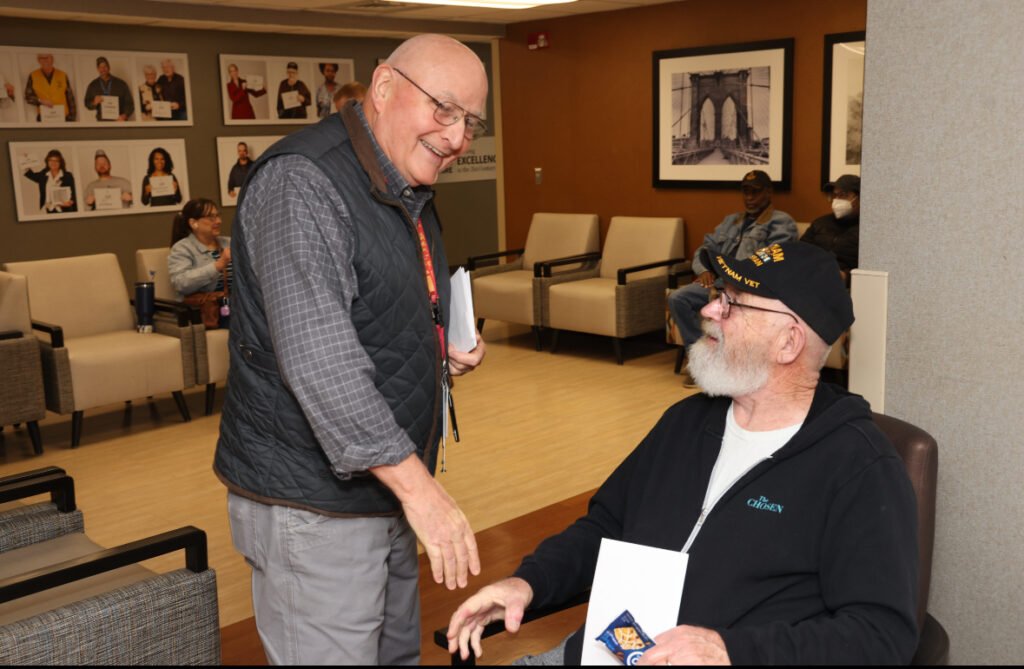
HRO is now embedded into everything TVHS does — this has been in the works for six years. Now, they are at the point where all teams — admin, clinical and support — are mirroring the HRO functions and principles. All teams huddle regularly. Leaders serve on the front lines. Most leaders, including Nadeau, go to clinic and see patients as providers. The facility focuses specifically on leadership training for frontline supervisors.
“When we’re focused on the mission and people really understand what we do here at the VA, when teams work well together and train together and practice together, that is a surefire way to avoid burnout,” Nadeau states. “That’s what people need to understand. It is a team.”
The Metric That Matters Most
When asked which feedback or metrics best reflect care quality, Nadeau points to one number that all others roll up to: the overall rating of the hospital. “What do our customers think? Patient satisfaction is what we do. We are well over, I forget what it is, 85% in the overall rating of the hospital and 97% satisfaction rate when it comes to resolving patient concerns.” That rating encompasses everything. Is the clerk welcoming when you come through the front door? Is the bathroom clean? Are the people in the blood lab providing a good experience? Are the floors clean?
“Every little thing we work at rolls up to the experience,” Nadeau explains. “Every veteran that comes through the door, it doesn’t matter what they’re coming for or who they talk to, needs to leave here feeling like they had a good experience. If they go to the bathroom and the bathroom is dirty, that’s what they remember.” Everyone who works at TVHS, from environmental services to physicians, needs to understand they are absolutely an essential part of the team and what they do matters. “It’s very important for everybody that works here to come to work every day understanding that what they do is integral to our success, and that’s what we as leadership believe, and that’s what we work at every day with our staff, making sure they understand how important they are, irrespective of what their function is.”
The Challenge Ahead
Nadeau worries about one thing in particular: the growing push to give more veterans the opportunity to go to the community for their care. He understands the concern. Wait times and drive times matter. If veterans have to wait too long or drive long distances to get to VA Tennessee Valley Healthcare System, and they can find care in the community closer to home, that’s a benefit he can appreciate. But here’s what he wishes more people understood: TVHS has organized itself specifically to address those concerns.
The facility has reduced both drive time and wait time in its catchment area. They’ve established primary care and mental health operations in the communities where veterans live. TVHS has organized around geographic hubs in Murfreesboro and Chattanooga, with smaller satellites in surrounding communities. “The whole idea is that we provide primary care and mental health in the communities that veterans live in, so they don’t have far to drive,” Nadeau explains. “We are committed to having PACT [patient-aligned care teams] teams in those primary care and mental health facilities to see every veteran who chooses to come to the VA.”
If TVHS delivers on wait times, veterans will choose to come to VA. “I don’t worry that much about giving veterans options,” Nadeau says. “I think that’s fine. But if we are as successful as a health care organization delivering care in a timely fashion, veterans will vote with their feet.” The experience over the last ten years at VA Tennessee Valley Healthcare System has demonstrated exactly that. “We are doing more with less, and we’re doing it well, and veterans are understanding that and voting with their feet and coming to the VA. I think we’re on the right track.”
What Veterans Day Means
Growing up in Canada, Nadeau observed Remembrance Day every November 11, a day to remember those who fought in the First and Second World Wars. “I think Veterans Day is an opportunity for the average American, and that’s more important today than ever considering so few young people join the military, to reflect on what we owe those that stepped forward to defend our way of life,” he says. “Every one of these individuals has earned the right to expect that we as a nation will provide the best care possible for them, because that’s the commitment we made at the outset.”
For the 146,000-plus veterans TVHS serves, having a Chief of Staff who deployed to war with Marines, who understands what veterans went through, and who believes the mission is everything, means they’re receiving care from someone who gets it. Nadeau could have retired years ago. At 79, he continues to come to work every day because he chooses to, because he believes in the mission, and because every veteran who comes to TVHS has earned the right to expect no less than world-class care delivered with respect, timeliness, and genuine understanding of what service and sacrifice actually mean.
Resources for Veterans & Healthcare Professionals
VA Healthcare & Patient Care Services
- VA Health Care Enrollment: How To Apply For VA Health Care | Veterans Affairs
- My HealtheVet: Home – My HealtheVet – My HealtheVet (Manage VA healthcare, prescriptions, and appointments)
- Veterans Crisis Line: Dial 988, then press 1 | Text 838255 | Veterans Crisis Line
Mental Health & Wellness Support
- Vet Centers: Find VA Locations | Veterans Affairs (Community-based counseling and readjustment support)
- National Center for PTSD: PTSD: National Center for PTSD Home
Primary Care & Whole Health
- VA Whole Health: Whole Health Home (Integrative health and wellness programs)
VA Careers & Employment
- VA Careers: Careers at VA – U.S. Department of Veterans Affairs
- Tennessee Valley Healthcare System Careers: VA Tennessee Valley Health Care | Veterans Affairs
Academic Partnerships
- Vanderbilt University Medical Center: Vanderbilt University Medical Center |
- Meharry Medical College: Meharry Home – Meharry Medical College
Connect with Tennessee Valley Healthcare System
- Tennessee Valley Healthcare System: VA Tennessee Valley Health Care | Veterans Affairs
- Primary Care Services: Available at all TVHS locations
About Dr. John Nadeau
Dr. John Nadeau, Chief of Staff at Tennessee Valley Healthcare System, served in the Marine Corps Reserve as a battalion surgeon, deploying twice to Iraq and serving as Force Surgeon for Marine Forces Reserve before joining TVHS full-time in 2008. With four decades of clinical experience in cardiology and healthcare leadership, he has led TVHS’s transformation from a one-star to five-star facility with the highest primary care quality measures in the VA system. He continues to practice medicine while serving as Chief of Staff, overseeing care for more than 140,000 veterans across Tennessee, Kentucky, and Georgia.
Veteran Excellence Magazine celebrates outstanding leadership in veteran healthcare and services.