

Summary
Fifteen years. That’s how long Ysabel Cardona spent navigating homelessness, domestic violence, chronic pain, and PTSD after her 2006 honorable discharge from the Navy. Then Wounded Warrior Project showed up with Project Odyssey retreats, the Warrior Care Network, Soldier Ride challenges, and a simple promise: we’ll be here when you need us. Cardona rebuilt everything. Her mental health. Her life. Her ability to tell her kids she loves them. Now she’s in Visalia, California, doing peer support in her community and organizing stand-downs she helped start. In 2024, she got the Rusty Baggett Award for embodying WWP’s mission. She gave it to her parents.
Don’t Call Her Just a Veteran
Ysabel Cardona doesn’t want you to think of her as just a veteran.
“I would say serving is what I’m doing for the rest of my life besides already serving,” she says from her home in Visalia, California. “Our community, no matter if you’re veteran or not, we’re all working together. Because at one time, we all have gone through something where we understand that we need each other.”
Structure came early. Grandfather in the Army. Father and two uncles, Marines. “From a very early age, I was held to higher standards,” she says.
Behind the structure? Anger. Silence.
Her father never said “I love you” much, but he made sure she had shoes and clothes. Her grandfather showed love through fruit and presence.
At 18, Cardona joined the Navy. “I’m not gonna sugarcoat it. That was like, well, let’s join the military because I get to travel the world. If I do want to go back to school, they’ll pay for it. But at that time, it was let me get out of here because I don’t want to be stuck.”
Top of Her Game
- She was unstoppable.
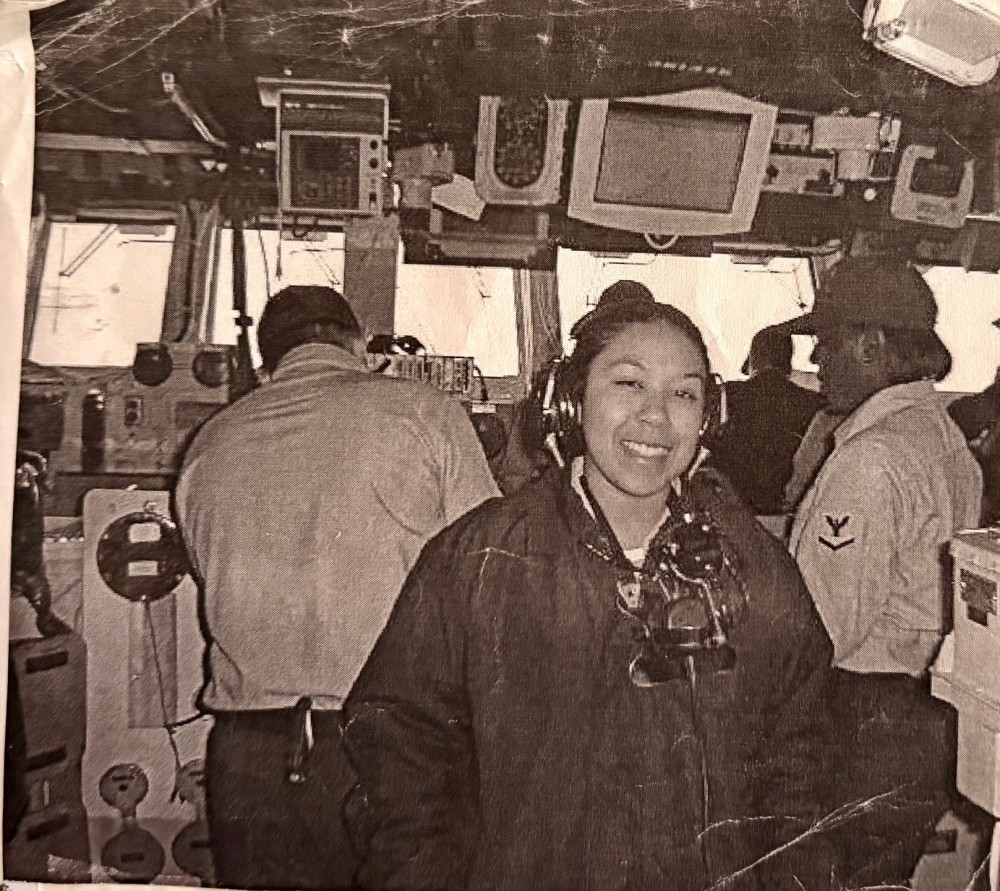
Top physical shape. Beat most of the guys in push-ups and sit-ups. Operations specialist, communications intelligence. First year in Japan. Then Hong Kong. Then Guam. Building a family that stretched across the globe.
“That’s the best part of serving. Seeing their children grow up, getting invited to weddings. I went to a wedding in Texas like two years ago from a guy that I served with. Most people don’t have that.”
But between 1999 and her 2006 honorable discharge, the injuries stacked up. Service-connected, every one. By the time she left, the girl who could outrun anyone felt broken in ways she couldn’t name yet.
When Everything Falls Apart
Coming home from deployment, her relationship was already over. Divorce. Then domestic violence. Then homelessness.
San Diego. Fifteen years on and off homeless. Couldn’t get hired even with her service connection. Single. Struggling.
“My transition was really hard. I’m not gonna lie. I was in San Diego. I couldn’t get hired, even with my service connection. I was on and off homeless for like 15 years trying to make it out there as a single person. The transition took a toll on my mental, emotional, physical health and financial. All four parts.”
Chronic pain. Insomnia. Depression. PTSD. All at once.
“It felt like it was always a cycle. I’d be doing good and then something would happen. Car broke down. Parked in the wrong place in San Diego. I know it’s part of life now, looking back on it, but when you’re going through it, it is the hardest struggle.”
She remembers “Straw,” the 2025 Tyler Perry film about being at your last straw. A desperate mother robs a bank to save her daughter. “When you see it happening in a movie like that, it really shows how much we’re just trying to get through the day. If everything could work perfectly, that would be so awesome. But it doesn’t work like that. Not in real life. You get behind on rent or it’s either gas or work. Or a little less food. And it sucks when you get to that part. But that is what we go through.”
The Program That Changed Everything
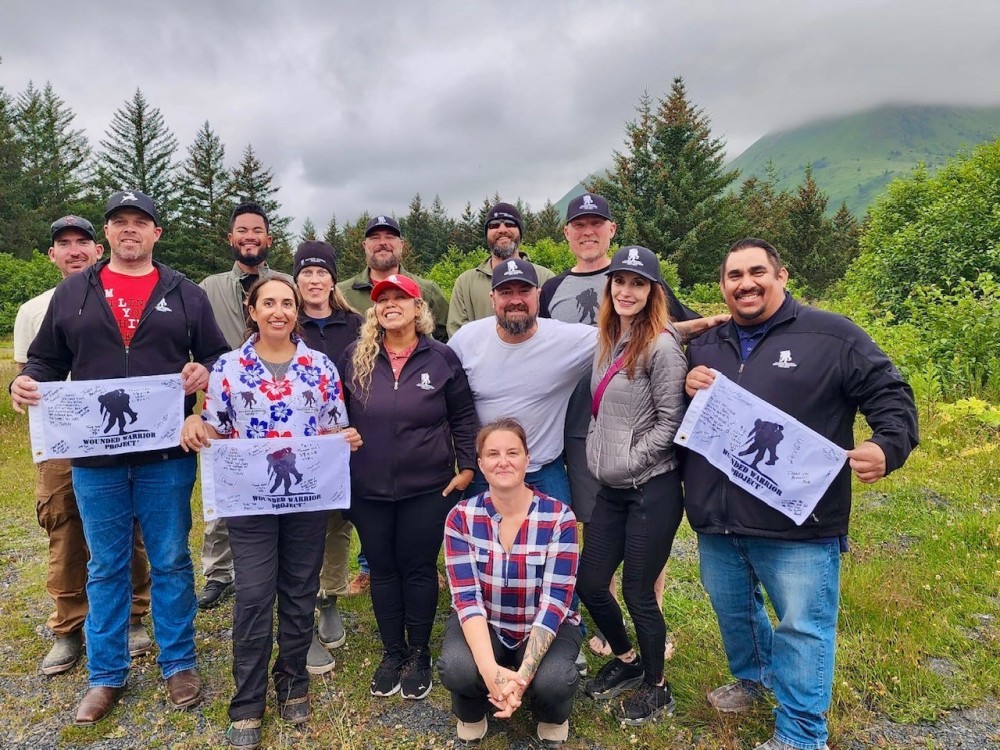
Wounded Warrior Project offers Project Odyssey in several formats: all-male, all-female, coed, family, and couple’s. Cardona signed up for the all-female retreat.
She showed up antisocial. Cut off. Drinking too much.
“I was like, well, let me just go. Let me see if this actually helps me.”
It did.
“I actually had fun. I might have been not as talkative, but just hearing the information, it broke down everything I was going through. I wasn’t crazy. All the other women that were there were talking about where they were at and what they were going through. There were so many similarities, even with the background being different. But we all served.”
Army. Navy. Marines. Different branches, same struggle.
“It wasn’t taboo to talk about it. That just started like, okay, I went to this program and then they had other things. Let me try something next. But it was like I had more courage.”
The WWP staff stayed connected. “Even if they weren’t near me, they were on the phone and be like, hey, what do you need? How can I help you? We could sign you up for that.”
So she kept saying yes. Soldier Ride – terrifying. Mental health workshops. Peer support groups. Physical health programs. Financial education. Then RUSH. The two-week intensive through Warrior Care Network.
Why It All Works Together
WWP doesn’t do one-and-done. According to the organization, programs work together holistically. Warriors can return when they need support. No graduation dates. No finish lines. Mind, body, soul – all of it connected.
Coming back from service isn’t the same as coming home. WWP gets that. Financial stress doesn’t disappear when bills get paid. Physical activity is medicine for mental health. It’s all connected.
“If I had just gone to one, I probably wouldn’t be where I’m at now. And I would have been stuck even longer. So you gotta use the tools that they have available for you. All of them. Because realistically, you’re not gonna get half of the information if you don’t, and you need it.”
“They’re not in one physical location. They are, but they’re not. Because there’s so many vets all across the world that they come to you by Zoom call, if you need them, or a phone call, or email, or text message.”
And the cost? WWP covers it. “They’re like, don’t worry about it. We have donors and that’s why we have these programs because we know that it changes you and it helps you.”
Two Weeks That Rewired Her Brain
COVID hit. Isolation pushed Cardona back into depression. She told WWP she wasn’t doing well. They connected her with RUSH through Warrior Care Network.
“Usually when you go to counseling, it’s like one or two appointments in a month. The 45-minute hour. That’s usually what you get. But for these two weeks, intense, every day session of professional people who actually care about you, want to know why you’re going through that and how can they help you? I only touched the surface of what my stuff was.”
Questions she’d been avoiding for years. Questions about the past. Questions about whether any of it was her fault.
The answers? All the same. No.
“I couldn’t have changed or stopped anything that was happening because it was out of my control. It makes a light bulb go off. Because before, it was, I wish that never happened to me. I wish that I could have changed that. I used to say those things. I don’t say those things no more.”
What she says now: I went through a very hard complex situation. I know it’s not my fault. I can tell myself I love myself. I’m a very wonderful, kind person. I survived all of that.
“If I hadn’t gone to RUSH, I would have never understood why that program is so important. It’s you versus you. It’s always gonna be like that in life. And when you understand that, we are our best friends. We don’t get told that. Maybe you need to be okay by yourself. Why? Because you’re your best friend. You gotta love you.”
She teaches her children that. “I’m not here to give you a hard time. I wanna give you guidance. But you gotta make all these decisions. It’s always going to be like that for the rest of your life. And if you’re not paying attention, because you’re not treating yourself with 100% love, you’re gonna get it wrong.”
From Broken to Leader
Cardona didn’t stop at healing herself. She does peer support in her community and helps organize the stand-downs she started in Visalia.
“I had to let go of my ego. Just because you knew everything does not mean that I need to lead with that. One thing that WWP talks about in peer leader training is one is enough if they just show up for an event. Because that person, you don’t know when their last day will be here and you might have changed it or impacted them somehow.”
No more military structure. No more “this is what you’re gonna do and you’re gonna listen.” Round table now. Open discussion.
“When you have the more in-depth question of, hey, this is what we’re working towards, how do you guys feel about that? It might take five, 10 more minutes in a meeting, but is that gonna kill you? No. Because that might be their only interaction talking to people for the day, and it might have made them have a better day.”
Last year, she broke her ankle. God said sit down. Stop helping other people. Take care of yourself. “I would have never stopped. I would have just kept on going.”
Now everything looks different. “When you’re trying to just take a shower and be able to walk all over again, it’s not a fast-paced life anymore. I don’t even care if there’s a load of laundry sitting on the floor anymore. I’m not going to be yelling at my kids because I’m so thankful that I have my leg and I’m walking.”
The Award She Gave Away
- Rusty Baggett Award. Recognizes veterans who embody WWP’s mission.
Cardona gave it to her parents.
“I know it’s my award, but I gave it to my parents. Because that’s their home. Back to the support system. I could have never done the stuff that I did without talking to my parents about all the values they instilled in me. It’s because of my folks.”
What Strength Means Now
Ask her how she defines strength today compared to in uniform, and Cardona gets quiet.
“Strength was because I thought that’s what I had to do. I wanted to wear the uniform. And I lost myself a little bit along the way. Coming back to strength is in being prepared and understanding all of it. You gotta really take accountability for what are we doing? Why are we doing it? And asking ourselves, are we happy too? If we don’t understand any of those questions for any of the stuff we’re doing in our life, it’s kind of pointless.”
44 Years Old and Finally Living
Today, Cardona is 44. Two kids – daughter, 15. Son, 24. Walking 2.5 miles now after relearning to walk following ankle surgery. Making cupcakes. Taking herself out for dessert at Bravo Farms.
“I’m okay with being at that point in my life. Hey, I’m gonna go take myself to Bravo Farms down the street and have a dessert and enjoy the vacation and go put your feet up. You’d be surprised how many people say, I can’t do that. And I said, why? You’re gonna go feed yourself. You should look at it as, hell yeah. Go get that piece of apple pie, eat half of it, take the rest home.”
She tells her kids she loves them. All the time. Something her father never did. Hikes with her daughter. Tells her son to pay attention to his surroundings.
“Don’t wait to enjoy your life. Easier said than done. But make the roast, enjoy your pasta, and yeah, go back outside for a walk too afterwards. But don’t wait for anything anymore at this point of our life. What for?”
A good day? Simple. Making dinner together. Asking the kids what they need. Affording groceries. Paying bills on time.
“I used to be so busy that I wasn’t focused on those things, and I’m thankful now that I am back to having fun being in the kitchen. I’m gonna make cupcakes. That’s all they worry about. They’re hungry and going to school. So why was I so stressed out about all the other stuff? Because I thought it was important, but it really isn’t.”
Walk away from Cardona’s story remembering one thing:
“I love them. I don’t have to meet them, but you’d be surprised how many people aren’t told that they’re loved or that you’re enough, that people actually do care. When you do that, it changes me, but it changes them too. I pray for the world right now. But just putting love back out there. I’m a cheerleader for everybody. It doesn’t matter where you start at. I would hope they know that it’s okay. I’m gonna be there to support them on the sideline.”
To veterans stuck right now, overwhelmed, don’t know where to turn:
“No one is perfect in life, not even me. I have messed up, down, all over 10 times, had my car towed. But that doesn’t make us any less worthy. It doesn’t make it where we’re not able to succeed in life still. Keep going. We’re not done yet. None of us are done yet. We’re only beginning, we still have another 40 years to our lives or 50. So don’t give up. One day at a time. You’re not done yet.”
And then, because she’s Cardona:
“But if you want to change your life, you have to do the work. They’re open. They’re available for you. So try it out.”
One more thing.
“At 44, it’s okay to eat waffles and add the mai tai. Because you don’t know how much time is left here. At the end of the day, don’t wait to enjoy your life. This is after the storm, and after Wounded Warrior Project.”
WWP’s Long Game
Not Done Yet
The woman who couldn’t afford gas or groceries in San Diego now takes herself out for apple pie at Bravo Farms. She tells her kids she loves them every day. She makes cupcakes. She’s 44 years old, and she’s done waiting.
“I know if I needed to talk to somebody, I could call WWP today,” she says. “I’ll probably end up going back to another Project Odyssey sometime this year because I’m barely getting back to my normal. I had a lot to go through last year. But I know I’m never alone, and I know that they’re there for me.”
Fifteen years homeless. Now she’s the one other veterans call when they’re stuck.
“Some people might not like WWP, but I can say for myself, no, they had my back. They helped me. They were there for me. And I know they’re gonna be there for me.”
The girl who could outrun anyone at 18 broke somewhere between Japan and 2006. The woman at 44? She’s not broken anymore. She’s just beginning.
“We’re not done yet. None of us are done yet.”
Resources for Veterans
Wounded Warrior Project Programs
Wounded Warrior Project
https://www.woundedwarriorproject.org
Project Odyssey
https://www.woundedwarriorproject.org/programs/mental-wellness/project-odyssey
Warrior Care Network
https://www.woundedwarriorproject.org/programs/mental-wellness/warrior-care-network
Soldier Ride
https://www.woundedwarriorproject.org/programs/physical-health-wellness/soldier-ride
All WWP Programs
https://www.woundedwarriorproject.org/programs
Crisis and Mental Health Support
Veterans Crisis Line
Call 988, then press 1
Text 838255
https://www.veteranscrisisline.net
VA Mental Health Services
Main VA Health Benefits Line: 877-222-8387
https://www.mentalhealth.va.gov
PTSD Support – National Center for PTSD
Main VA Health Benefits Line: 877-222-8387
https://www.ptsd.va.gov
Make the Connection
Main VA Health Benefits Line: 877-222-8387
https://www.maketheconnection.net
VA Healthcare Services
VA Health Care
877-222-8387
https://www.va.gov/health-care
Substance Use Disorder Treatment for Veterans
877-222-8387
https://www.va.gov/health-care/health-needs-conditions/substance-use-problems
Caregiver Support
Caregiver Support Line: 855-260-3274
https://www.caregiver.va.gov
About Ysabel Cardona
Ysabel Cardona served in the Navy from 1999 to 2006 as an operations specialist and was honorably discharged. Fifteen years of chronic pain, PTSD, depression, and homelessness followed. Then came Wounded Warrior Project. Now she does peer support in her community and helps organize the stand-downs she started in Visalia, California, where she lives with her two children. She received the 2024 Rusty Baggett Award for embodying WWP’s mission of empowering wounded warriors.
Veteran Excellence Magazine celebrates outstanding leadership in veteran healthcare and services.